
Birds of Maui
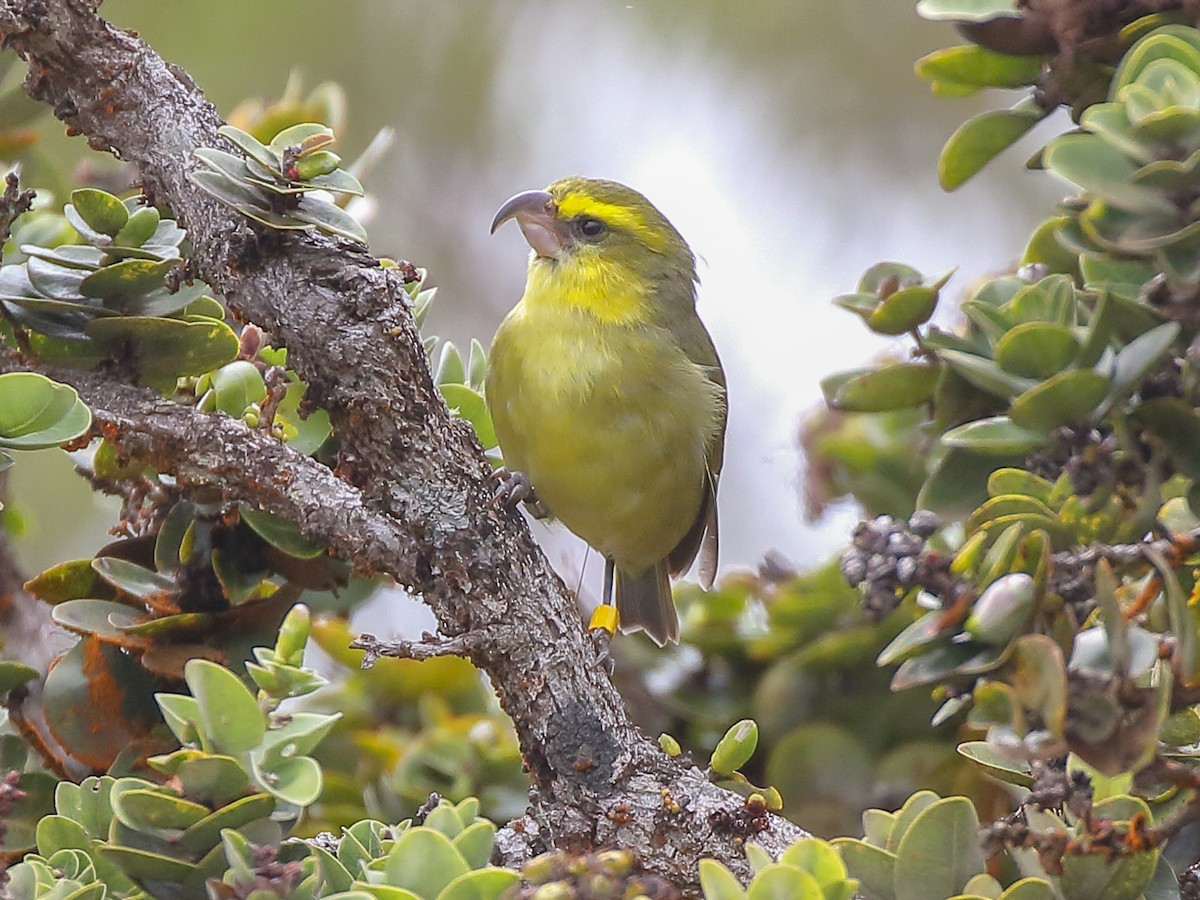
While several of my Bird Posts have consisted of birds named after a particular ornithologist or historical character, some of them refer to locations. I have loved researching places where I have visited (such as Helsinki, Chiricahua Mountains and Baja). This Bird post, however, has to do with the AOS decision to dismantle all names that are eponyms of bad people. In the process they are eliminating names that are attached to PLACES and the members feel “wronged” by the reference, either in the common name of the scientific name. Below is just such a case: the Maui Parrotbill (Pseudonestor xanthophrys).[1]
What’s All the Buzz about a Beak?
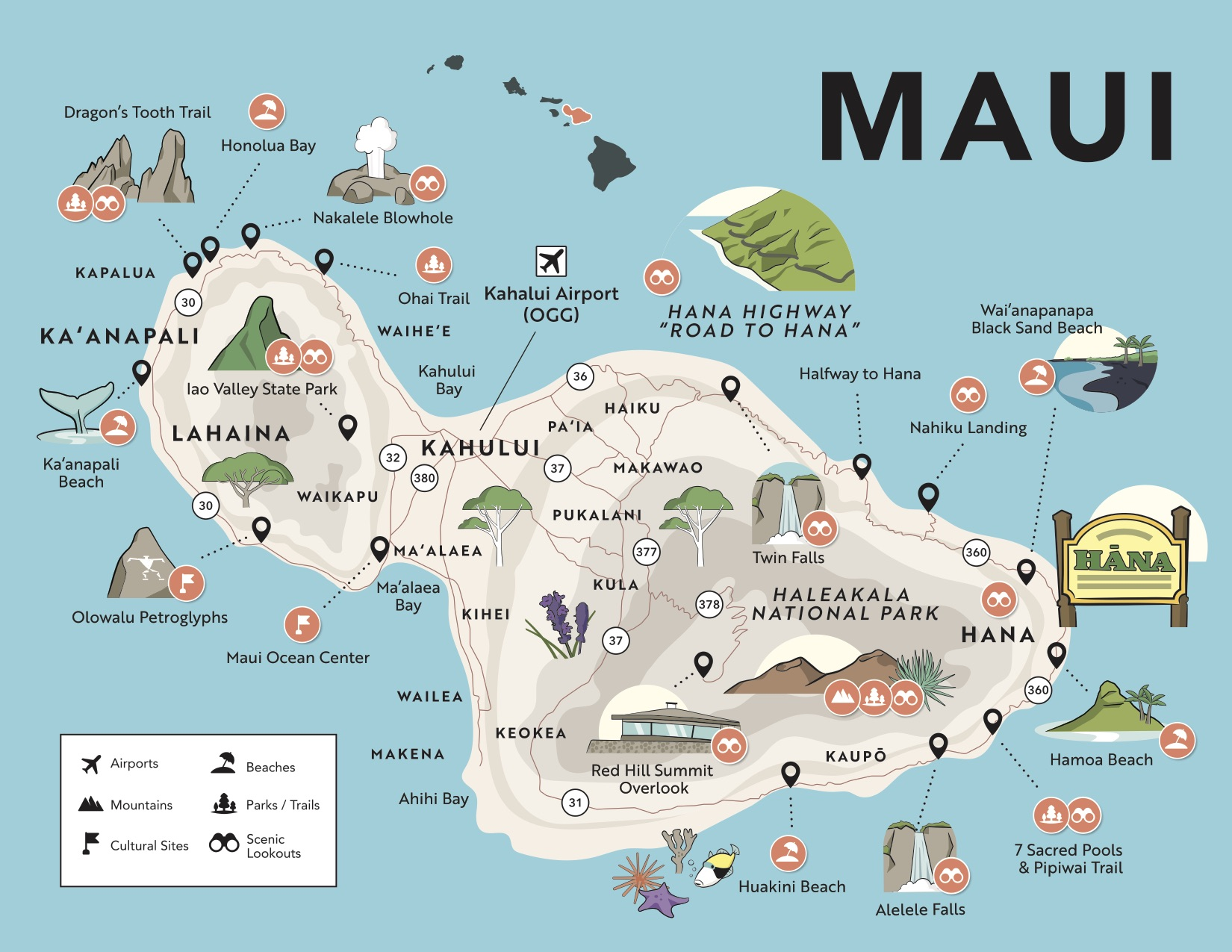
Like the Inca Dove, this bird story doesn’t involve a person. “Maui” is the Hawaiian island where it lives, so there’s no namesake to praise or condemn. The story here isn’t about a mistaken eponym. It’s about a misleading English name, a Hawaiian name that ornithology’s official naming committee (the AOS) refused to accept, and the way that refusal was expressed.
What’s wrong with the name. Steve Hampton points out that “parrotbill” is misleading.[2] True parrotbills belong to an entirely separate family that includes babblers and the Wrentit, while this bird is a Hawaiian honeycreeper, part of the finch family. The name comes from its look: the bird gets its English name from its large, hooked bill, which it uses to split branches in search of insects in high-elevation wet forests. The scientific name, Pseudonestor xanthophrys, was given by Walter Rothschild in 1893. “Pseudonestor” (“false Nestor”) compares its bill to that of the Nestor parrots, such as the kea and kākā from New Zealand. Hampton notes that, according to some accounts, the bird was thought to be extinct after 1890, and the English name was given after it was rediscovered in 1950.
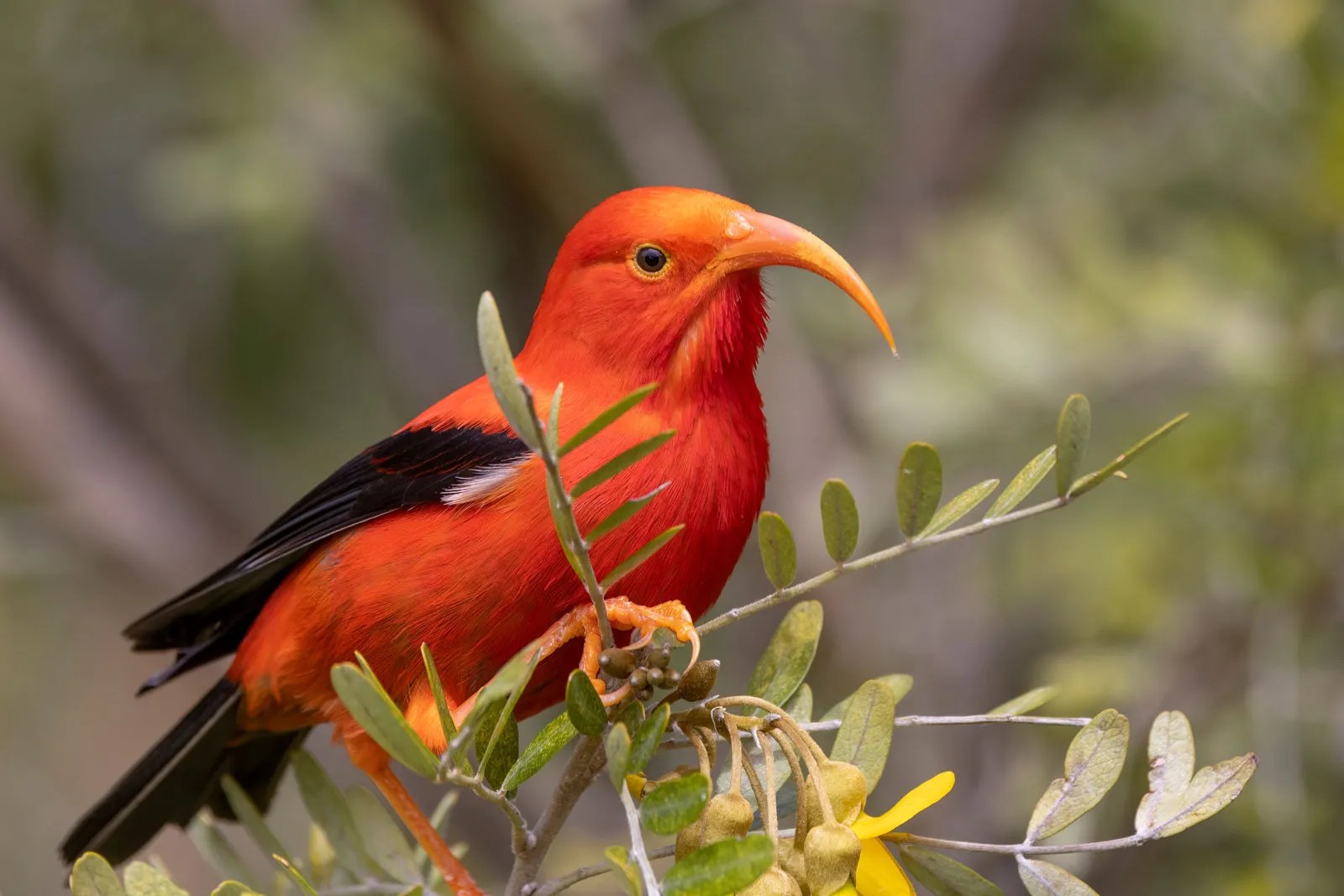
The Hawaiian name. Hawaiian names are common for Hawai’i’s birds: ‘Elepaio, ‘Apapane, ‘I’iwi, ‘Amakihi. But this bird’s original name had been lost. Steve Hampton says that of the 21 Hawaiian honeycreepers, only two have official English names, and the Maui Parrotbill is one of them.[2] The Maui Forest Bird Recovery Project asked the Hawaiian Lexicon Committee to choose a fitting name, and in September 2010 a naming ceremony was held in the bird’s habitat. The new name was Kiwikiu: “kiwi” for its curved beak and “kiu” for its secretive behavior. Those behind the effort hoped that a Hawaiian name would build local support for saving one of the world’s rarest birds.
Why it became an outrage. In 2011, Hanna Mounce, a PhD student working to protect the bird, asked the North American Classification Committee to make Kiwikiu the official name. The committee rejected it 10 to 0. The vote alone isn’t what angered people; it was the comments. Members called the new name contrived, unfamiliar, and unpronounceable, and one wrote what were considered racist comments, “The last thing we need is yet another ridiculous Hawaiian language name.” Others argued that Maui Parrotbill was long established, and one said he didn’t understand how a species’ name could affect conservation. In August 2020, the AOS formally apologized for the “offensive and culturally insensitive” comments. Six of the ten members’ comments had to be redacted, and the AOS said that if the comments had been made after its 2015 ethics statement, the members would have been referred to its Ethics Committee.
What made this especially painful was the contrast with other cases. Mr. Hampton notes that in 2018 the committee voted 9 to 1 to rename the Gray Jay the Canada Jay at the request of well-connected Canadian ornithologists, while the Hawaiian conservation community couldn’t win a single vote. He reads that as a sign of who got heard and who didn’t.
Who’s to blame? No single villain, and no one to revere or despise in the sense of Scott’s Oriole (the name Scott and name change are covered in depth on another Bird Post). The English zoologist, Walter Rothschild’s scientific name was a reasonable comparison by the standards of his day. The criticism falls on the committee members who mocked the Hawaiian name, but their names were redacted from the public record, so there’s no individual to point to. If anyone deserves admiration here, it’s the conservationists like Hanna Mounce, the Maui Forest Bird Recovery Project, and the Hawaiian Lexicon Committee, who gave the bird a name rooted in its own place.
The proposed solution. The AOS pilot project includes the Maui Parrotbill specifically because changing it to Kiwikiu had already been recommended, which would recognize the importance of Indigenous names, especially for endemic species with small ranges. In practice, the change has already happened outside the official checklist. Hampton reports that Kiwikiu is widely used in Hawai’i, in scientific publications, and by the U.S. Fish and Wildlife Service. As of his August 2026 post, the AOS still hadn’t implemented its committee’s recommendations, so Maui Parrotbill remains the official English name for now.
Why the Maui Parrotbill story is urgent. The name fight takes place against a likely backdrop of extinction. The Parrotbill once lived throughout Maui and Moloka’i, but its habitat is now confined to a narrow band of high-elevation forest on northeastern Maui. In October 2019 biologists moved 13 birds to a restored forest at Nakula on Haleakalā’s leeward slope. The birds adapted well, but the effort failed because of avian malaria spread by introduced mosquitoes. A spell of unusually warm weather in 2019 apparently let the mosquitoes expand into areas once thought too high for them. The U.S. Fish and Wildlife Service estimated the wild population at 135 birds in 2021, with extinction projected between 2024 and 2032, most likely in 2027. Researchers are now trying “mosquito birth control,” releasing male mosquitoes carrying an incompatible strain of Wolbachia bacteria to suppress the population. The current state of mosquito affairs is tenuous and survival seems doubtful.
That urgency gives a strong arc to any series of Bird Posts looking to save these and other bird species. The Parrotbill might be lost before ornithology’s official list ever calls it by the name its own island chose for it.
NOTE: for the complete list of names that could be removed from the roles of bird names, see [FOOTNOTE 3], below
=-=-=-=-=-=-=-=-=-=-=-=-=-=-=-=-=
References:
[1] https://birdsoftheworld.org/bow/species/maupar/cur/introduction
[2] Stephen Carr Hampton is a citizen of the Cherokee Nation and he has been an avid birder since age seven. Steve’s a former resource economist for the California Department of Fish and Game, where he served as a tribal liaison, assessed natural resource damage, and oversaw environmental restoration after oil spills. He spent 25 years with the agency, including work on seabird restoration, and has since retired to Port Townsend, Washington. Steve was a member of the AOS Ad Hoc Committee on English Bird Names, where he helped draft the recommendation to change all honorific names. He has personal ties to the history he writes about: he traces his ancestry to the Cherokee Constitutional Convention of 1827. He has also proposed replacement names for 82 species, including “Yucca Oriole” for Scott’s Oriole.
[3] LIST of English Names Attached to Birds

