
Birds of Hammond
The running narrative on William Alexander Hammond gets complicated quickly. He has a compelling backstory and a much darker side that is racist and disqualifying. First: he was a brilliant surgeon and field doctor. During the Civil War, he was appointed by Abraham Lincoln to be Surgeon General of the US Army. Second: Although he was a giant of the 19th-century military medicine apparatus, Hammond gave orders instructing army field surgeons to harvest and send the remains of indigenous people to Washington, DC for “comparative anatomy studies.” Third: Hammond had a combative nature, which led to fierce personality clashes. The most significant clash was with Edwin Stanton, the Secretary of War at the time. Stanton had Hammond court-martialed for over-spending and insubordination and dismissed by the army. And Fourth: Even though Hammond was later vindicated from the verdict from the court-martial (under an act of Congress in 1878), he was restored to the army and merely placed on its retired list. The lingering doubts of his merit remained much longer.
Why are we even talking about this guy in a Bird Name Post? Hammond happens to have been a passionate bird collector out west and he had some birds and animals named in his honor, i.e. in his infamy, which may be a better word.
So let the stories begin:
So, Who was W. A. Hammond?
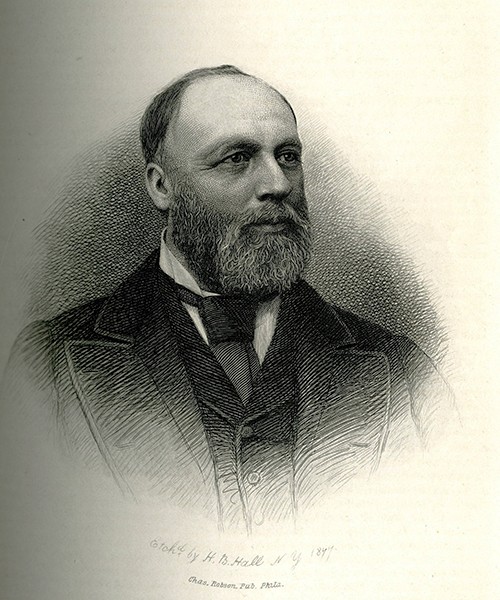
Born in Annapolis, Maryland, Hammond was the second son of Dr. John Wesley Hammond and Sarah Pinckney. He was raised and educated in Harrisburg, Pennsylvania. Following his father’s example, he received his medical degree from New York University at the age of 20. After his internship and a few months in private practice, he became assistant-surgeon in the US Army, serving for eleven years from 1849 to 1860. He was first sent to New Mexico and took part in the Sioux Indian Wars. He participated in campaigns against the Indians in New Mexico and Kansas.
During these years, he also researched and wrote on the subjects of physiology and botanicals, and received notoriety in the field, which eventually led to a professorship offer. While on sick leave, he visited military hospitals in Europe. He conducted field research over many years and the resulting paper was awarded a prize by the American Medical Association in 1857. For example, with a common interest in poisons acting on the nervous system (especially snake venom), he wrote a paper with Silas W. Mitchell that was published in 1859. That same year he was elected to the American Philosophical Society.[1]
While serving at Fort Riley as medical director, Hammond also “collected biological specimens.” In 1860 he accepted a chair of anatomy and physiology at the University of Maryland School of Medicine in Baltimore and left the army.
What Was it About William Alexander Hammond’s behavior?
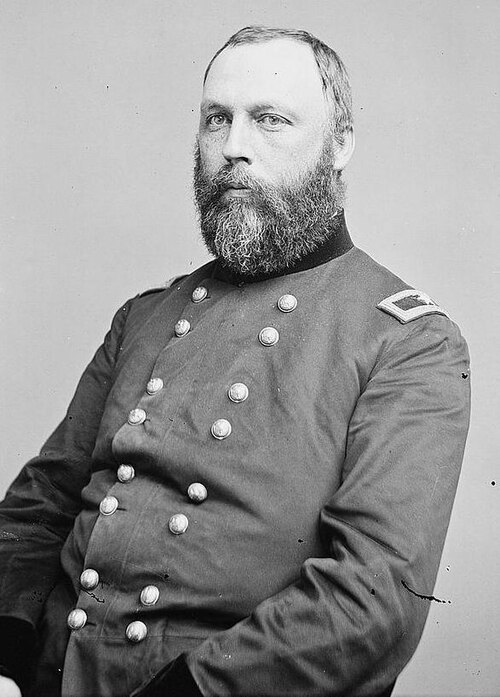
Historians attribute William Alexander Hammond’s behavior, (both his innovative yet combative leadership and his macabre harvesting of Indigenous remains) to a combination of 19th-century scientific racism, institutional hubris, and an aggressive obsession with medical modernization. While many doctors rejected Hammonds methods, for those soldiers cared for under his new system, the sick and wounded were better cared for than they ever had been before, and the mortality rate was lower than in the experience of any prior army.
After the war, Hammond’s career remained active as a professor of nervous and mental diseases at several medical schools. Neurology was a new specialty, and Hammond became a pioneer in the field. Medical history bibliographers Garrison and Morton identify Hammond’s 1871 book, A treatise on diseases of the nervous system, as the first American treatise on neurology (Norman 4542). Hammond contributed several other works to the neurology field, and he opened up a sanatorium for patients with nervous and mental diseases in 1888.
Nonetheless biographers categorize Hammond’s broader actions into three primary drivers:
1. Pseudo-Scientific Racism and “Comparative Anatomy”
Hammond operated firmly within the 19th-century scientific community’s obsession with the belief in racial hierarchies. Historians note that Hammond was a staunch white supremacist who believed Caucasian people represented the pinnacle of human evolution.
- The Brain Obsession: As a pioneer in the nascent field of neurology, Hammond specifically wanted freshly deceased, “pure-ancestry” Indigenous brains.
- Justifying Subjugation: Historians point out that his orders to harvest remains for the Army Medical Museum were designed to use physical anatomy to “prove” that non-white races were mentally and physically inferior. This medical framework effectively weaponized science to justify the ongoing federal genocide of Native Americans and westward expansion.
2. A Callous “Ends Justifies the Means” Scientific Obsession
Historians describe Hammond as an “aggressive modernizer” who prioritized scientific inquiry over human empathy or moral implications. He had a booming resonating voice often used to intimidate other scientists and physicians. He was driven by data.
- When he established the Army Medical Museum in 1862, his directive to field surgeons to gather “specimens of morbid anatomy” was not a suggestion, it was an absolute dictum.
- To Hammond, the battlefield casualties of the Indian Wars were simply an abundant supply of research with aboriginal material. Historians document that his zeal drove him to ask local territory leaders for bodies and even prompted field troops to preserve harvested Indigenous remains in whiskey barrels for transport.
3. An Arrogant and Uncompromising Personality
Hammond’s behavior during his clash with Secretary of War, Edwin Stanton, which led to his 1864 court-martial, is attributed to his notoriously arrogant, impetuous, and rigid personality.
- The Calomel Rebellion: While Hammond may have been medically correct in banning toxic, mercury-based calomel from army supplies, he did so via a sweeping executive fiat that deeply insulted mainstream civilian physicians and military doctors in his day.
- Clash of Egos: Historians outline that Hammond refused to play Washington politics or compromise with Sec. of War, Edwin Stanton. Hammond’s aggressive overspending (exceeding a massive $10 million budget by 15%) and his blunt refusal to defer to political superiors ultimately gave Stanton the ammunition he needed to orchestrate his dismissal.
In short, historians view Hammond as a brilliant clinical visionary whose legacy is severely darkened by the era’s institutional racism and his own ruthless disregard for the humanity of the bodies that were exhumed and the people he studied.
For this Bird Name series, Hammond fits with Couch and Abert as an Army officer who collected for Baird. He also fits with Audubon and Townsend for their grave robbing of sacred Indian burial grounds. His story adds a twist the others don’t have: the flycatcher was named by John Xantus de Vesey,[3] the protégé that Hammond had trained, as a thank-you to his mentor. Hammond’s own reputation was nearly destroyed by a scandal and then restored, which makes him appear to be a sympathetic figure.
=-=-=-=-=-=-=-=-=-=-=-=-=-=-=-=
Footnotes
[1] https://en.wikipedia.org/wiki/William_A._Hammond
[2] FAQ about the name changing rules set forth by the AOS.
[3] John Xantus de Vesey (born János Xántus; 1825–1894) was a colorful, highly eccentric Hungarian exile, lawyer, and self-taught zoologist/ornithologist who became one of the most prolific early field collectors for the Smithsonian Institution in the American Southwest and Mexico.
=-=-=-=-=-=-=-=-=-=-=-=-=-=-=-=
Appendix
Bird & Animal Species named for Hammond
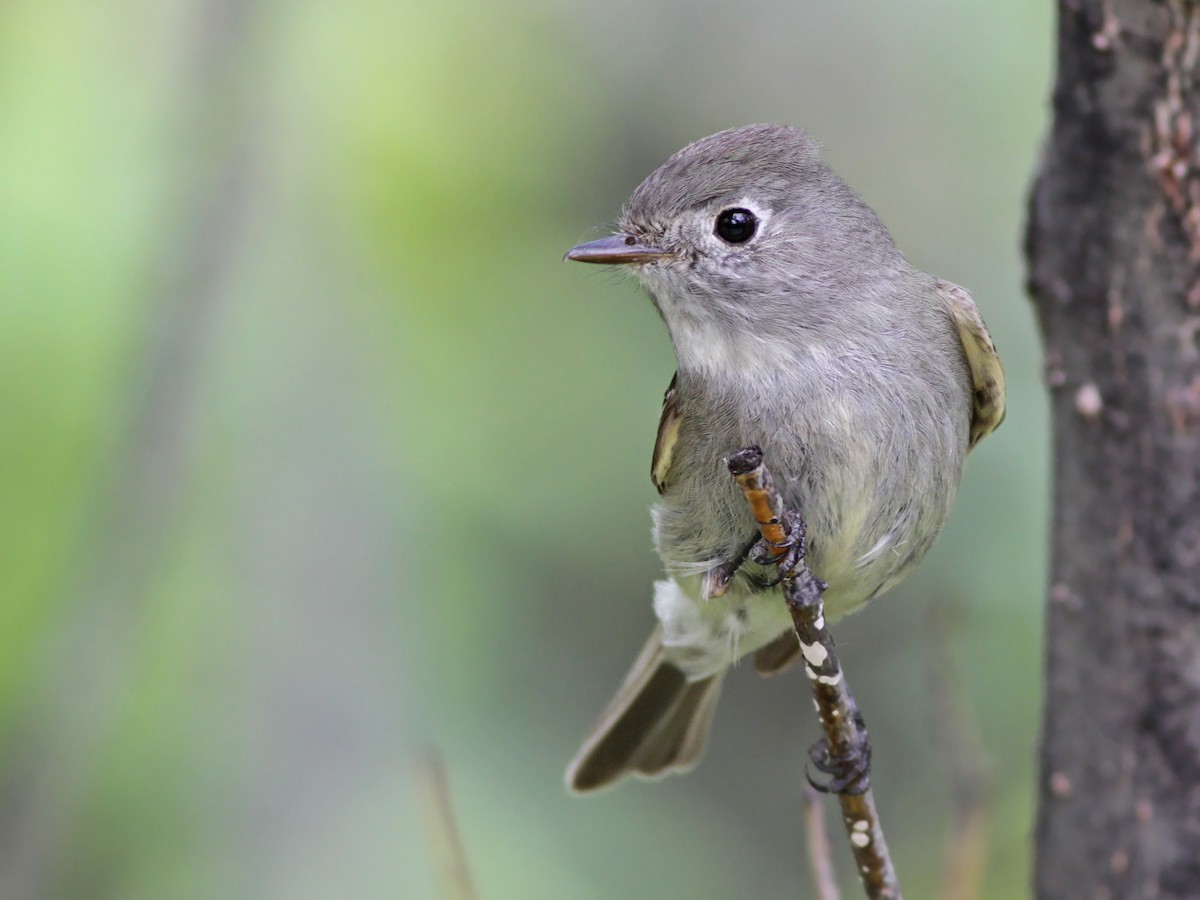
- Hammond’s Flycatcher (Empidonax hammondii). John Xantus described it in 1858 and named it to thank Hammond for encouraging his western fieldwork. A few sources say Baird named it or date it to 1859, but most give Xantus credit in 1858. That year Xantus published the flycatcher description in the Proceedings of the Academy of Natural Sciences of Philadelphia.
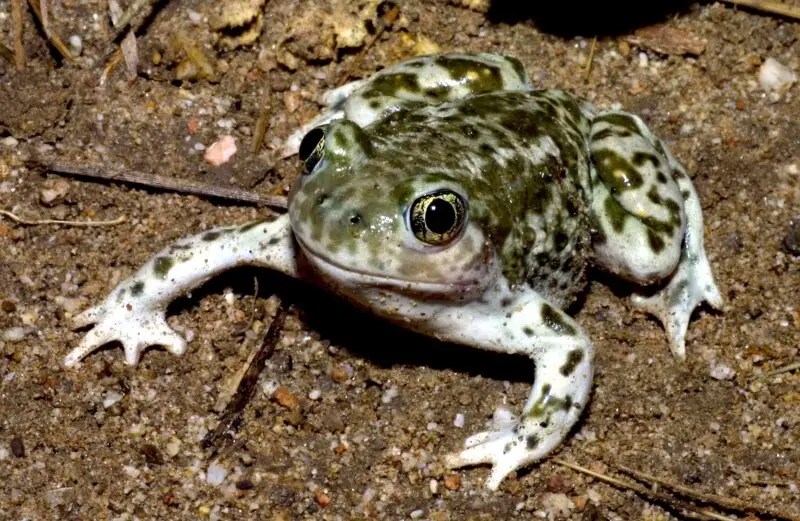
- Western Spadefoot (Spea hammondii), a toad. Baird named the spadefoot toad in 1859. The western spadefoot toad bears the name Spea hammondii. Spencer Fullerton Baird of the Smithsonian Institution named that toad after Hammond, who collected specimens for him at Fort Riley.
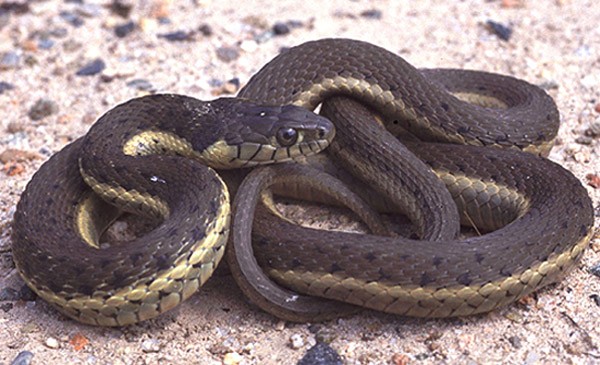
- Two-striped Garter Snake (Thamnophis hammondii). Hammond collected the first specimens. Robert Kennicott named the garter snake after Hammond in 1860.
Written Works about Hammond
- Blustein, Bonnie Ellen. Preserve Your Love for Science: Life of William A. Hammond, American Neurologist. Cambridge UP, 1991. Blustein’s biography, and the original descriptions of the toad and snake come from internet sources. Blustein’s book is the standard scholarly biography.
- “Dr. William A. Hammond.” American Battlefield Trust, www.battlefields.org/learn/biographies/dr-william-hammond. Accessed 8 Oct. 2026.
- “William Alexander Hammond.” Hektoen International, 16 Oct. 2018, hekint.org/2018/10/16/william-alexander-hammond/. Accessed 8 Oct. 2026.
Medical Writings by Hammond
- (1856) The physiological effects of alcohol and tobacco upon the human system. Fort Riley (Google’s edition is from the Physiological memoirs, Lippincott. 1868, p. 43. Hammond conducted the experiments on himself. Translated into German)
- (1857) Experimental research relative to the nutritive value and physiological effects of albumen starch and gum, when singly and exclusively used as a food.
- (1861) On uraemic intoxication
- (1863) Treatise on hygiene, with special reference to the military service (Surgeon General Hammond found no satisfying manual on hygiene. He wrote one. For some reason Hammond toned down a clearly racist passage in a last-minute note, adding it was premature to reserve military valor to the whites. Freemon 2001 p. 163 at Google Books)
- (1864) Lectures on venereal diseases. Philadelphia (Google Books)
- (1864) A Statement of the Causes Which Led to the Dismissal of Surgeon-General William A. Hammond from the Army; with a Review of the Evidence Adduced before the Court. New York.
- (1866) On wakefulness: With an introductory chapter on the physiology of sleep
- (1868) Physiological memoirs. Lippincott
- (1869) Sleep and its derangements. Lippincott
- (1871a) Treatise on Diseases of the Nervous System, Hammond’s disease, a form of athetosis, was first described by Hammond (in the Treatise on Diseases of the Nervous System) and now bears his name. He also coined the word “athetosis”.
- (1871b) Physics and physiology of spiritualism. New York: D. Appleton & Co. (Spiritualism, paranormal, hysteria, etc.)
- (1873) Insanity in Its Relations to Crime. New York.
- (1876) Spiritualism and Allied Causes and Conditions of Nervous Derangement. New York.
- (1879a) “The non-asylum treatment of the insane”. Neurological contributions, p. 1, at Google Books 1 New York: G. P. Putnam’s Sons. 1879 (The insane should not automatically be sent to an asylum. A general practitioner is perfectly capable of handling many cases.)
- (1879b) Fasting Girls: Their Physiology and Pathology. New York, 1879. Listed on Project Gutenberg (Mystics who never eat; anorexia mirabilis, anorexia nervosa).
- (1881) On certain conditions of nervous derangement, somnambulism—hypnotism—hysteria—hysteroid affections, etc. at Google Books. New York: G. P. Putnam’s Sons. 256 p.
- (1883) A treatise on insanity in its medical relations (Internet Archive)
- (1887) Sexual impotence in the male and female. Detroit. 1887
- (1899) “The American soldier and venereal diseases: A refutation of some of the statements of Mr. Edward Atkinson”. NY Med. Jour. 70 (Atkinson, an anti-imperialist activist, had written on the situation of American soldiers in the Philippines).
The

