
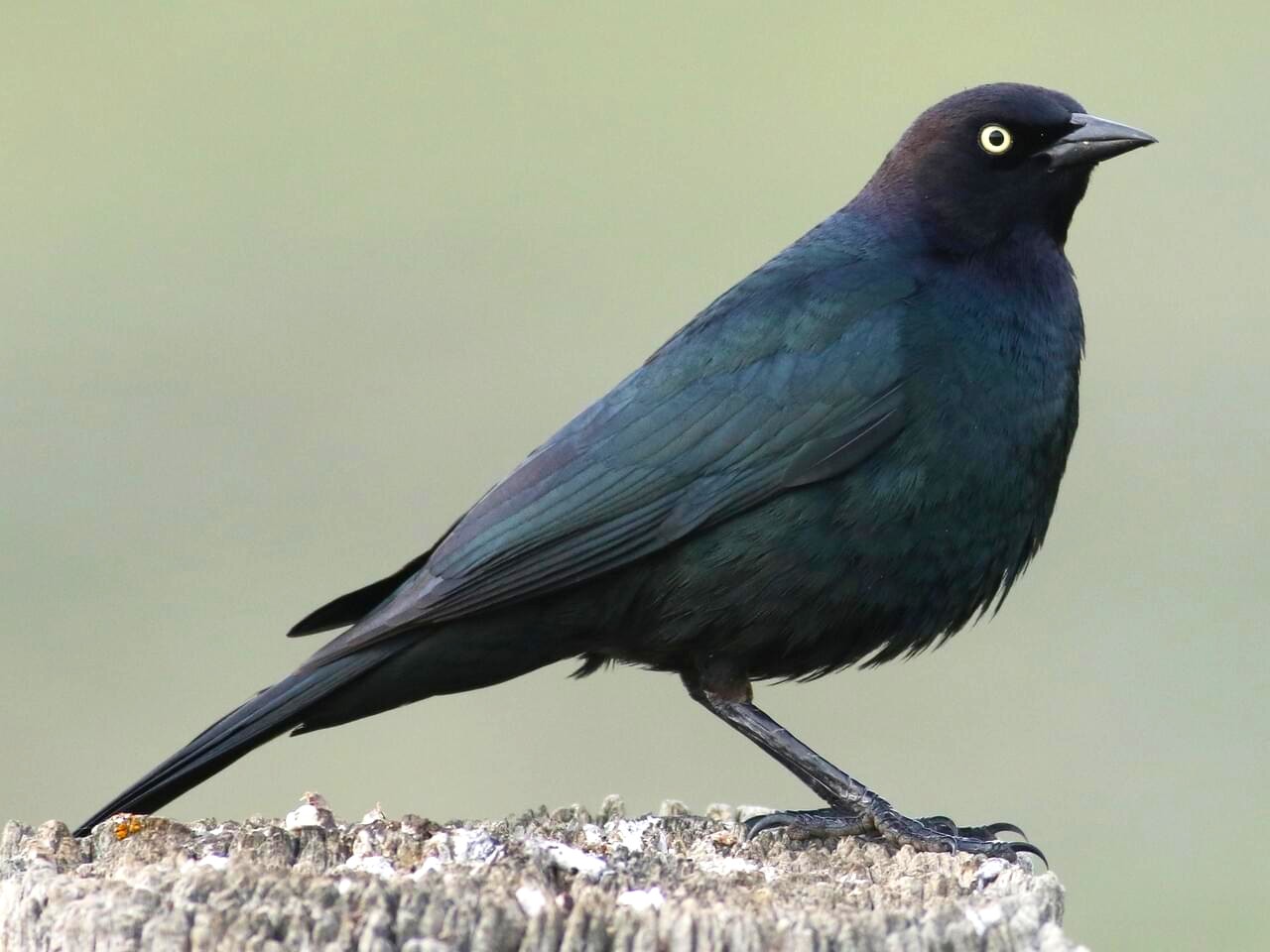
Birds of Brewer
Thomas Mayo Brewer (1814–1880) was a Boston physician, newspaper editor, publisher, naturalist and oologist (egg collecting specialist). He has several birds and a mole named after him and Brewer proves an interesting character to research for the Bird Names for Birds inquiry.
Thomas Brewer was born and grew up in Boston. He graduated from Harvard College in 1835 and three years later from Harvard Medical School. As a youth, he had developed an interest in birds. And that interest became more of an obsession. He eventually abandoned his career as a doctor, after a few years, in order to concentrate more fully on ornithology and egg collecting.[1]
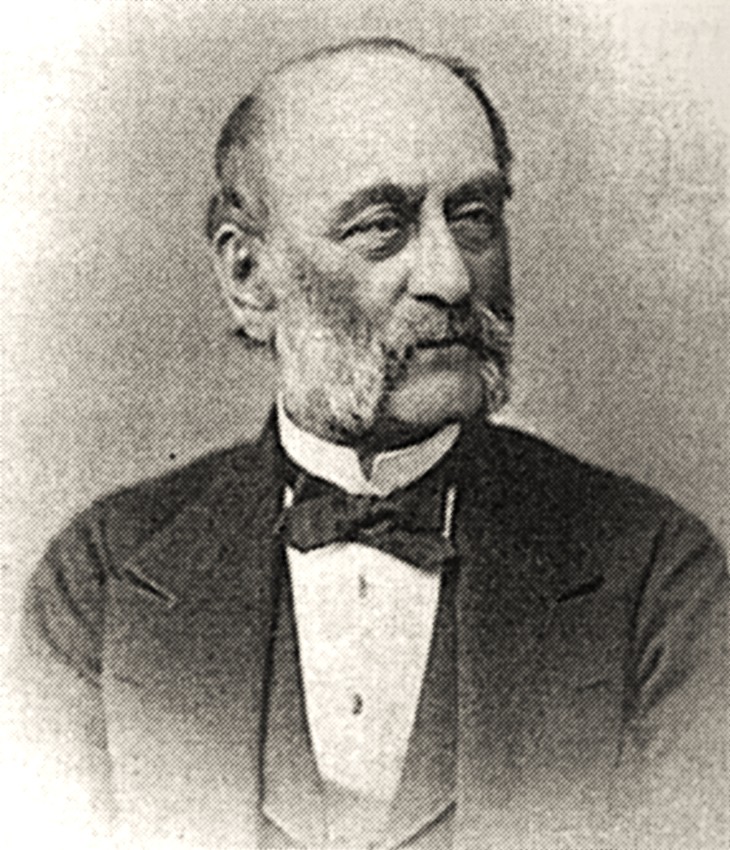
Brewer also enjoyed writing and politics, and in his pursuits, he become editor of the Boston Atlas in 1840. He was a friend of John James Audubon (1785 – 1851) in that ornithologist’s later life. In 1849, Brewer was placed in charge of the oological department for the Boston Society of Natural History. His only solo major work, the Oölogy of North America, stopped after one volume (1857, Smithsonian) because it was too expensive to finish. Sixteen years after his departmental duties (1865), Brewer was officially elected as a member of the Boston Society of Natural History.[1]
Brewer continued working as a writer and publisher while researching as an ornithologist. He joined the publishing firm of Hickling, Swan & Brown. That firm became Hickling, Swan & Brewer, when he became a partner in 1857. The publisher subsequently became Swan, Brewer & Tileston, when Hickling retired. Brewer contributed to a number of ornithological publications, including to John James Audubon’s Ornithological Biography. And as an editor, Brewer published Alexander Wilson‘s “Birds of America.” Audubon and John Bachman, companions on some expeditions with Brewer, assigned Brewer’s name to a duck, a blackbird, and a mole found in Martha’s Vineyard.
Brewer is perhaps best known as a joint author, with Spencer Fullerton Baird and Robert Ridgway, of A History of North American Birds (3 volumes, 1874), which was the first attempt since John James Audubon‘s (thirty years prior) to complete the study of American ornithology.[1]
Serving as a trustee of Mount Auburn Cemetery for a decade, from 1870 to 1880, Thomas Brewer often sat on the benches on the grounds and watched birds while resting there. He also served on the Boston School Board.[4]
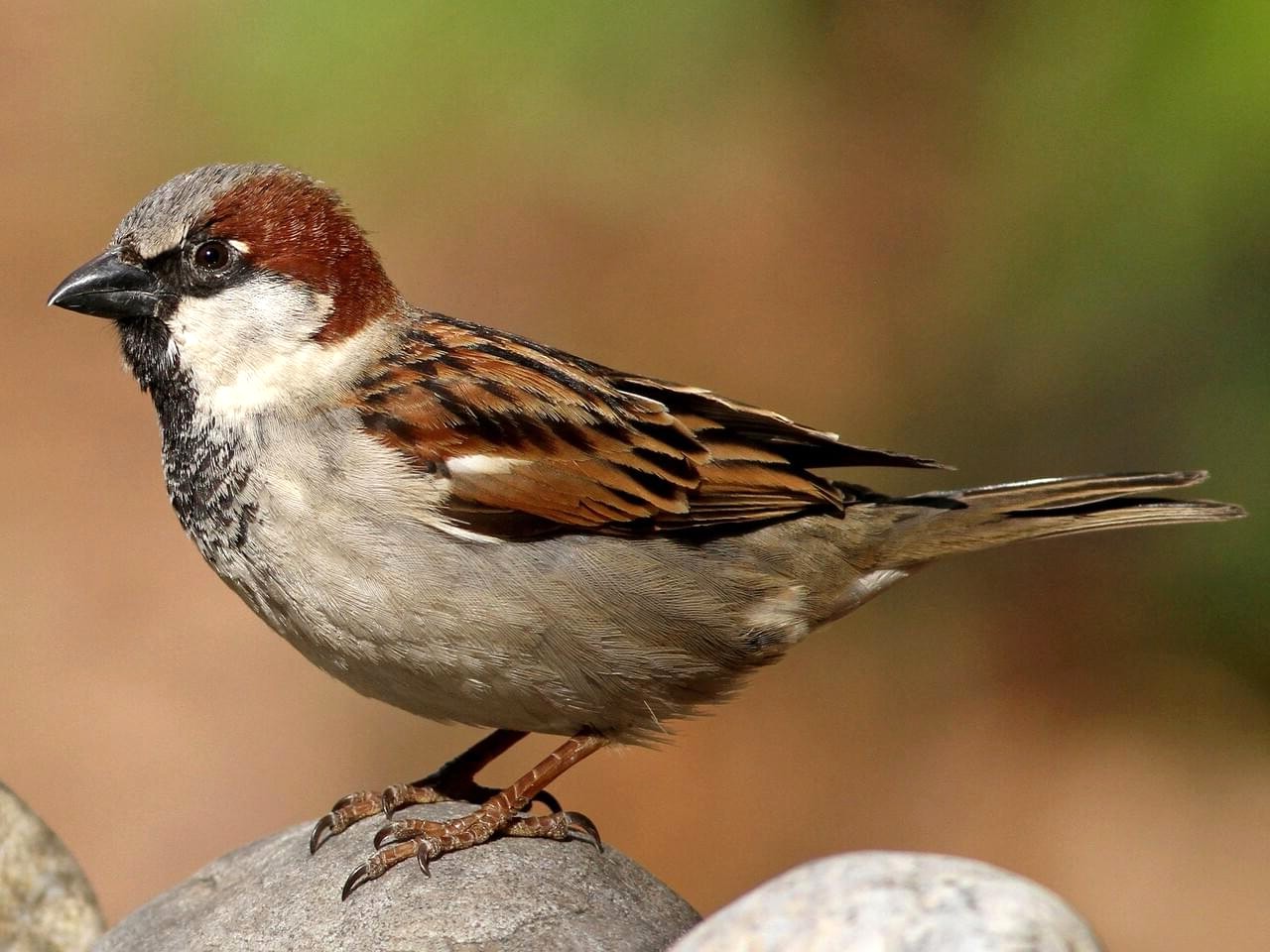
In his last decade of life, Brewer sparred with Elliott Coues over the fate of the House Sparrow, a recently introduced bird from England that was multiplying and crowding out domestic birds far faster than expected. While Coues and most ornithologists were in favor of killing many of them off, Brewer tried to defend the sparrows. This ornithological event was dubbed “The Sparrow War.“[1]
While the Sparrow War seems like a singular event, there was a similar non-native species introduction of the Eurasian tree sparrow that was made by Carl Daenzer who brought the sparrow into Lafayette Park in St. Louis, Missouri during the 1870s.
Brewer died in Boston in January, 1880, while the fate of the House Sparrow (Passer domesticus) was still being debated in the public square.
Thomas Brewer’s Background and Personal Life
Born into a patriotic Massachusetts family, Thomas Mayo Brewer (1814 – 1816) was the son of James Brewer (1742–1818) and Abigail Stone Brewer (1777-1860).[2] The Brewer family has been prominent in Massachusetts for more than 280 years. Thomas’s father, James Brewer, was an early American patriot leader and businessman; while relatives include an ancestor, Gen. Wilmon Blackmar, a Civil War medal of honor winner, and a great nephew, Wilmon Brewer, an acclaimed poet, biographer, and philanthropist.[3]
Thomas’s older brother, Gardner Brewer (1806–1874) was eight years older than Thomas, and Gardner rose to become one of Boston’s wealthiest 19th-century merchants. He made his fortune importing and exchanging dry goods. He went on to honor his birth city, Boston, by giving the city the fountain that sits on Boston Common. Their younger brother, John Reed Brewer (1818–1893), rose to be the owner of World’s End, a 251-acre park on a peninsula in Boston with coastline, open fields, tree-lined paths, and woodlands. To this day the World’s End is open to the public.
Thomas married Sarah Rice Coffin (1822 – 1907) in 1849 and she gave birth to two children. She went by Sally and together they raised Lucy Stone Brewer (1854–1921), named for Thomas’s mother’s family, and Charles Coffin Brewer (1856–1863), who died as a young child. Thomas Mayo Brewer died in 1880, so she outlived him by about 27 years.
Why the Brewer Blackbird is “blacklisted”
Although the AOS has no individual “bad actors” list, on November 1, 2023, its Council committed to changing all English names of birds in its region that are named directly after white people, plus other names judged offensive and exclusionary. Brewer’s Blackbird and Brewer’s Sparrow fall under that blanket rule. americanornithology
Thomas Mayo Brewer was not among the names picked out for misconduct. The AOS pilot project covers six species, including four eponyms honoring people whose behavior the AOS thinks most would call reprehensible. Those include Bachman’s Sparrow, Scott’s Oriole and Townsend’s Warbler. Brewer is not among them. changeNPR
The main criticism of Brewer may be more ecological rather than moral: the “Sparrow War” over the perpetuation or extermination of the House Sparrow seriously dented his reputation, particularly with Elliott Coues continuing his mockery after Brewer’s death.
- In an 1868 Atlantic Monthly article, he defended House Sparrows and urged their introduction to control insects in the states, starting in Massachusetts. bpl
- Boston’s city government introduced them successfully in 1869. bpl
- Elliott Coues, and most other ornithologists, then favored killing many of the House Sparrows, while Brewer kept defending them. Wikipedia
- Coues called Brewer the sparrows’ only remaining major defender. Coues kept taking digs at Brewer in the press for his passions for the sparrow, even after Brewer’s death. bpljstor
- Modern writers say this War put serious dents in Brewer’s ornithological reputation. 10000birds
On politics front, there appears to be nothing linking Brewer to slavery or similar harms. An 1856 letter he signed celebrates Boston voters backing Frémont, the antislavery Republican candidate. fromthepage
As of October 2026, there are no replacement names announced for Brewer’s Blackbird or Brewer’s Sparrow. A September 2026 report says AOS surveys found about three-quarters of birders accepted the decision to rename 152 species in the U.S. and Canada. wildlife
=-=-=-=-=-=-=-=-=-=-=-=-=-=-=-=-=-=-=-=-=-=
Footnotes and Sources:
[1] Thomas Mayo Brewer – Wikipedia
[2] Thomas Mayo Brewer’s parents and patriot ancestors: One chronology names his parents as James Brewer (1742–1806) and Abigail Stone Brewer (1777-1860), and says a paternal grandfather, Colonel James Brewer, took part in the Boston Tea Party. Wikipedia instead lists James Brewer (1742–1818) as an early patriot leader and businessman in this prominent Massachusetts family. The sources disagree on the exact generations, as well as some discrepancies on the years of James Brewer’s death (1806 or 1818). If James died in 1806, he could not have been the father of Thomas Mayo Brewer, (born in 1814) so we’ll go with the later date. Also assuming the dates are correct, James seems to have had extraordinary elderly power: he was 35 years older than his wife and remained fertile into his mid-70s. pdf. roomWikipedia
[3] https://en.wikipedia.org/wiki/Wilmon_Brewer
[4] fromthepagepdfroom Brewer, Thomas Mayo – Mount Auburn Cemetery (FromThePage)
Other sources from the internet, include:
- Gardner Brewer – Wikipedia
- What’s in a Name: Brewer’s Blackbird – 10,000 Birds
- Brewer chronology – Kouroo Contexture
- Brewer letter – Kennicott documents (FromThePage)
- The House Sparrow in Boston, Parts I & II – BPL
- The Great Sparrow War – JSTOR Daily
- English Common Names Pilot Project – AOS
- AOS petition response – Change.org
- Birders argue over plan to change dozens of bird names – NPR
- Most birders support renaming species – The Wildlife Society
- Brewer’s Sparrow – DVOC
- Brewer’s Sparrow – World Bird Names
- A Letter from T. M. Brewer to Osbert Salvin – The Condor
- Thomas Mayo Brewer – WEHD
=-=-=-=-=-=-=-=-=-=-=-=-=-=-=-=-=-=-=-=-=-=-=
Appendicies
Birds & a Mole named for Brewer
- Brewer’s Blackbird (Euphagus cyanocephalus) named by Wagler, 1829. John Audubon named it Quiscalus breweri in 1843. Wagler had described it more than ten years earlier, so Brewer kept the common name but lost the scientific one.
- Brewer’s Sparrow (Spizella breweri) Cassin, 1856. John Cassin named it for his friend Brewer; it was described in the 1856 Proceedings of the Academy of Natural Sciences. One subspecies: S. b. breweri, honors Brewer while another subspecies, the Timberline Sparrow, S. b. taverneri, honors Taverner.
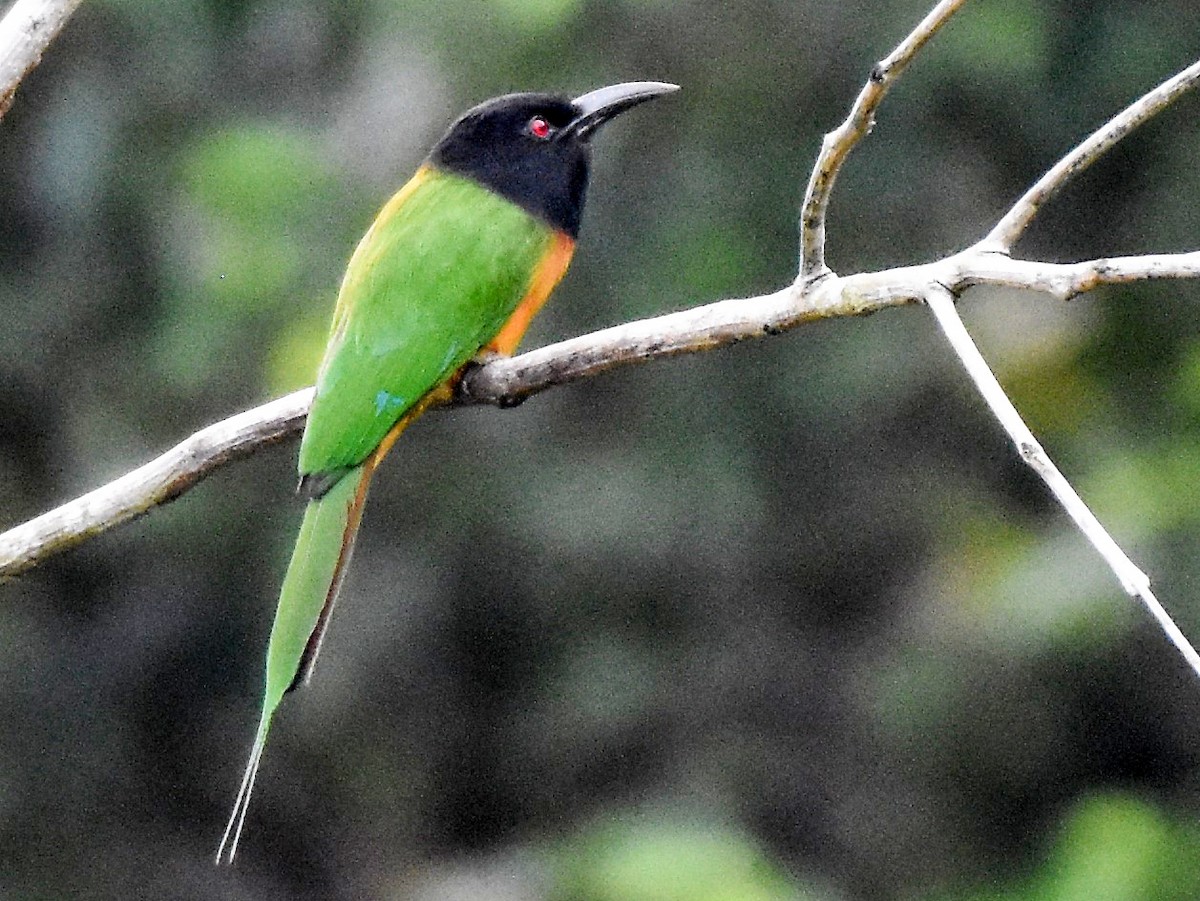
- Black-headed Bee-eater (Merops breweri) Cassin, 1859. An African bird, outside AOS jurisdiction. It is listed among the breweri names honoring Brewer, who first identified the species.
- Brewer’s Duck (Anas breweri) Audubon. This turned out to be a hybrid and was dropped; it was a Mallard × Gadwall cross. The common name was later invalidated. www.10000birds.com +3
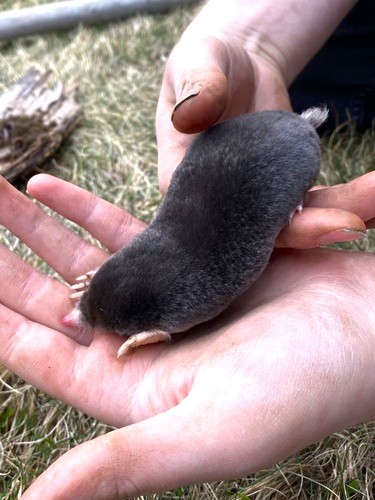
- Hairy-tailed mole (Parascalops breweri) named by John Bachman, who collaborated with Audubon. Bachman found the mole in Martha’s Vineyard, Mass.
Works by Baird and Brewer
- Baird, Spencer F., et al. A History of North American Birds: Land Birds. Little, Brown, 1874. 3 vols.
- Baird, Spencer F., et al. The Water Birds of North America. Little, Brown, 1884. 2 vols.
- Brewer, Thomas M. “The European House-Sparrow.” The Atlantic Monthly, vol. 21, May 1868.
- Brewer, Thomas M. North American Oölogy, Part I: Raptores and Fissirostres. Smithsonian Institution, 1857. Smithsonian Contributions to Knowledge 11.
- Brewer, Thomas M., editor. Wilson’s American Ornithology, with Notes by Jardine; to Which Is Added a Synopsis of American Birds. Otis, Broaders, 1840.
Works about Brewer, his ancestors and the Sparrow War
- Brewer, Wilmon. Looking Backwards. Marshall Jones, 1985.
- Brodhead, Michael J. “Elliott Coues and the Sparrow War.” The New England Quarterly, vol. 44, no. 3, Sept. 1971.
- Coues, Elliott. “On the Present Status of Passer domesticus in America.” Bulletin of the United States Geological and Geographical Survey of the Territories, vol. 5, 1879.
- “The Great Sparrow War of the 1870s.” JSTOR Daily, daily.jstor.org/the-great-sparrow-war-of-the-1870s.
- “The House Sparrow in Boston, Part I.” Boston Public Library Blog, www.bpl.org/blogs/post/the-house-sparrow-in-boston-part-i.
- Mearns, Barbara, and Richard Mearns. Audubon to Xantus: The Lives of Those Commemorated in North American Bird Names. Academic Press, 1992.
- “Meet the Little Brown Bird That Holds a Mirror Up to Humanity.” Audubon, www.audubon.org/magazine/meet-little-brown-bird-holds-mirror-humanity.
- Wood, Casey A. “A Letter from T. M. Brewer to Osbert Salvin.” The Condor, vol. 25, no. 3, 1923, pp. 100–01.
- “What’s in a Name: Brewer’s Blackbird.” 10,000 Birds, www.10000birds.com/whats-in-a-name-brewers-blackbird.htm.
One more source is the 1880 obituary of Brewer in the Bulletin of the Nuttall Ornithological Club (vol. 5, on JSTOR).

