
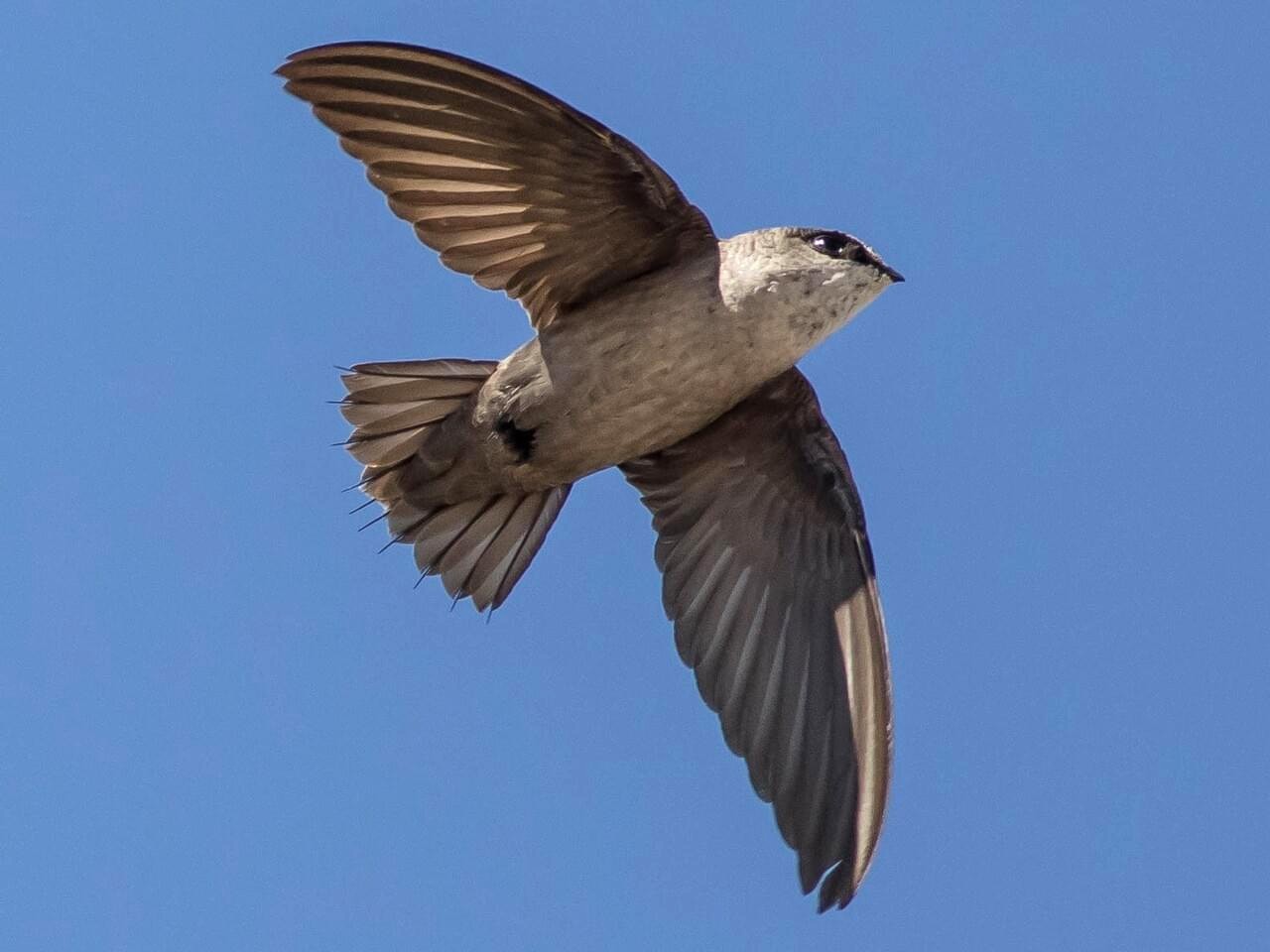
Birds of Vaux
The Vaux’s swift honors William Sansom Vaux (1811–1882) of Philadelphia. Vaux was a wealthy gentleman-scientist who studied minerals and collected antiquities. He was a longtime member and officer of the Academy of Natural Sciences of Philadelphia and belonged to the American Philosophical Society. His major legacy was his mineral collection, which was one of the finest in the country. He left all of his specimens to the Academy along with a sum of money to maintain the collection.[1]
Vaux makes a quiet but telling case as raised by the AOS: a wealthy collector who never went west, never wrote a paper, and never saw the swift alive, yet whose name is on one of the West’s best-known birds because a friend chose to honor him. It’s a good example of how many eponyms reflect friendship and patronage more than any connection to the bird itself.
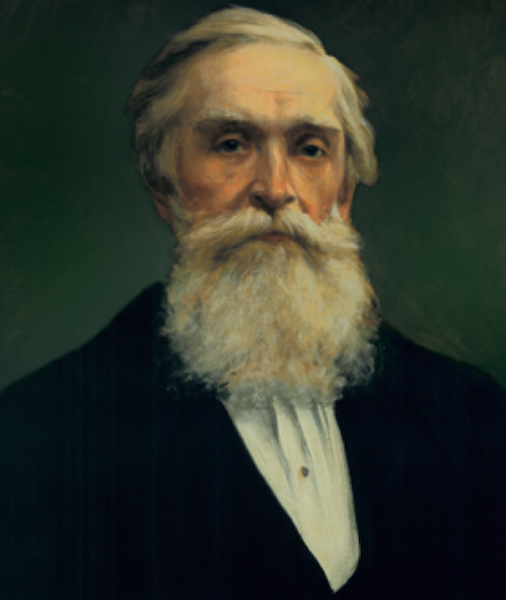
Who named the Vaux’s Swift?
John Kirk Townsend described and labeled the swift in 1839 as Chaetura vauxi, naming both the common and scientific names for William Vaux, who was his friend and fellow member of the Academy. The friendship was real. Townsend’s 1834 journey west with businessman, Nathaniel Wyeth, and the Harvard professor and botanist, Thomas Nuttall, was backed by the same scientific societies.
Townsend endured real hardship on the trail. He also spent time at Fort Vancouver and in Hawaii before returning east in 1837. He died in 1851 at the age of 41, from arsenic poisoning. which is the cause commonly suggested by his family.[2]
The Vaux family
The Vauxes were a prominent Philadelphia family and, like the Townsend family, they held strong Quaker roots with a confident scientific streak.
Pronounced “Vox,” William Sansom Vaux was born in Philadelphia on May 19, 1811, and died there on May 5, 1882. He came from a wealthy, prominent family and never had to work for a living. He collected minerals, coins, and antiquities, and worked to build the collections of the young Academy of Natural Sciences of Philadelphia. He joined the Academy in 1834, served it in many roles for 48 years, and was its vice president from 1864 to 1882. He also served as president of the Zoological Society of Philadelphia.
William Vaux’s younger relatives carried on those traits. George Vaux, Jr., William S. Vaux, Jr., and their sister, Mary Vaux Walcott, became known for photographing and measuring glaciers in the Canadian Rockies around 1900. This was some of the earliest systematic glacier monitoring in North America. Mary also became a notable botanical illustrator, sometimes called “the Audubon of botany.” Mary married Charles Doolittle Walcott, who later became the Secretary of the Smithsonian, [and a character whom I featured in my friends of John Wesley Powell, known as Powell’s Pals!]
Vaux made several trips to Europe to collect minerals. By the time of his deathVaux’s collection was considered the finest in the United States. He left his mineral and archaeological collections to the Academy, along with his library and supplemental money for their care. Vaux helped found the Numismatic and Antiquarian Society and served as treasurer of the American Association for the Advancement of Science from 1871 until his death.
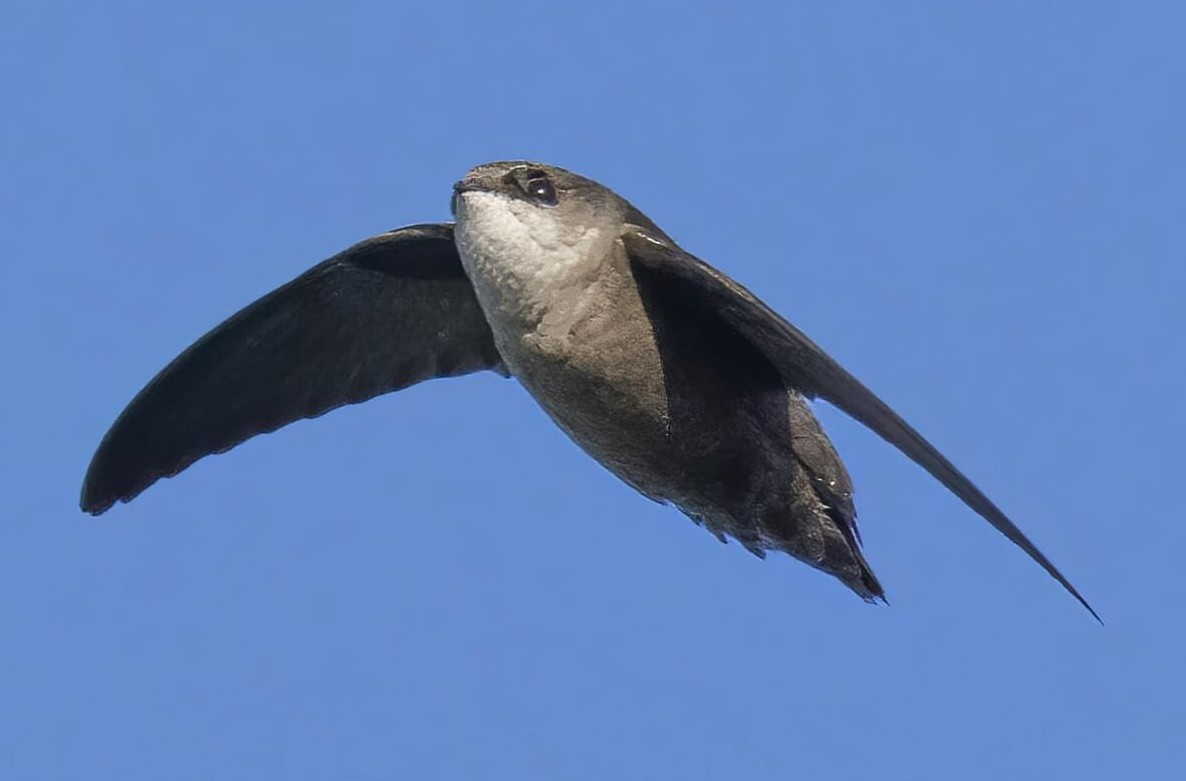
Should Vaux’s name come off the bird?
The Vaux name seems to be going away regardless of anything this curator may have done. In November 2023 the American Ornithological Society (AOS) announced it would change all English bird names currently named after people within its geographic jurisdiction. The AOS deliberately avoided judging individuals one by one. Rather than evaluating species case by case, the organization decided to change all eponymous bird names, partly because, as a committee co-chair put it, they imply possession of a species. Scientific names won’t change, so Chaetura vauxi will keep honoring him either way. American Ornithological Society Will Change the English Names of Bird Species Named After People – American Ornithological Society +3
On Vaux personally, there’s no well-known scandal or “mistake” attached to him. He’s one of the eponyms caught up in the blanket policy, not one of the people who prompted it. One figure with a genuinely troubling record in this backstory is Townsend, who by his own account of the Wyeth journey, described taking human remains from Native American burial sites in the Pacific Northwest. Skulls he exhumed were sent to Samuel George Morton, whose skull collection was used to support racist theories about human hierarchy. AOS’s Bird Names for Birds inquiries found only a few facts about Vaux’s life that could be confirmed with reasonable certainty. His friendship with Townsend was one of them. This indistinct story casts a dark shadow. Yet Vaux seems an unlikely target. Townsend, on the other hand, exhibited the racist behaviors that fueled the renaming movement, and it bears more directly on Townsend’s Warbler and Townsend’s Solitaire than on Vaux’s Swift.
On the timeline, the AOS began with a pilot project to determine new English names for an initial set of six North American species, with a broader rollout to follow. As far as I can find, Vaux’s Swift still carries its current official name. Because its range extends well into Mexico and Central America, it may not be among the first species addressed. The policy remains contested. Critics like ornithologist Van Remsen argued that opposition to removing all eponyms was extensive and unprecedented, while supporters see descriptive names as more inclusive and more useful for identifying birds. americanornithologytucson
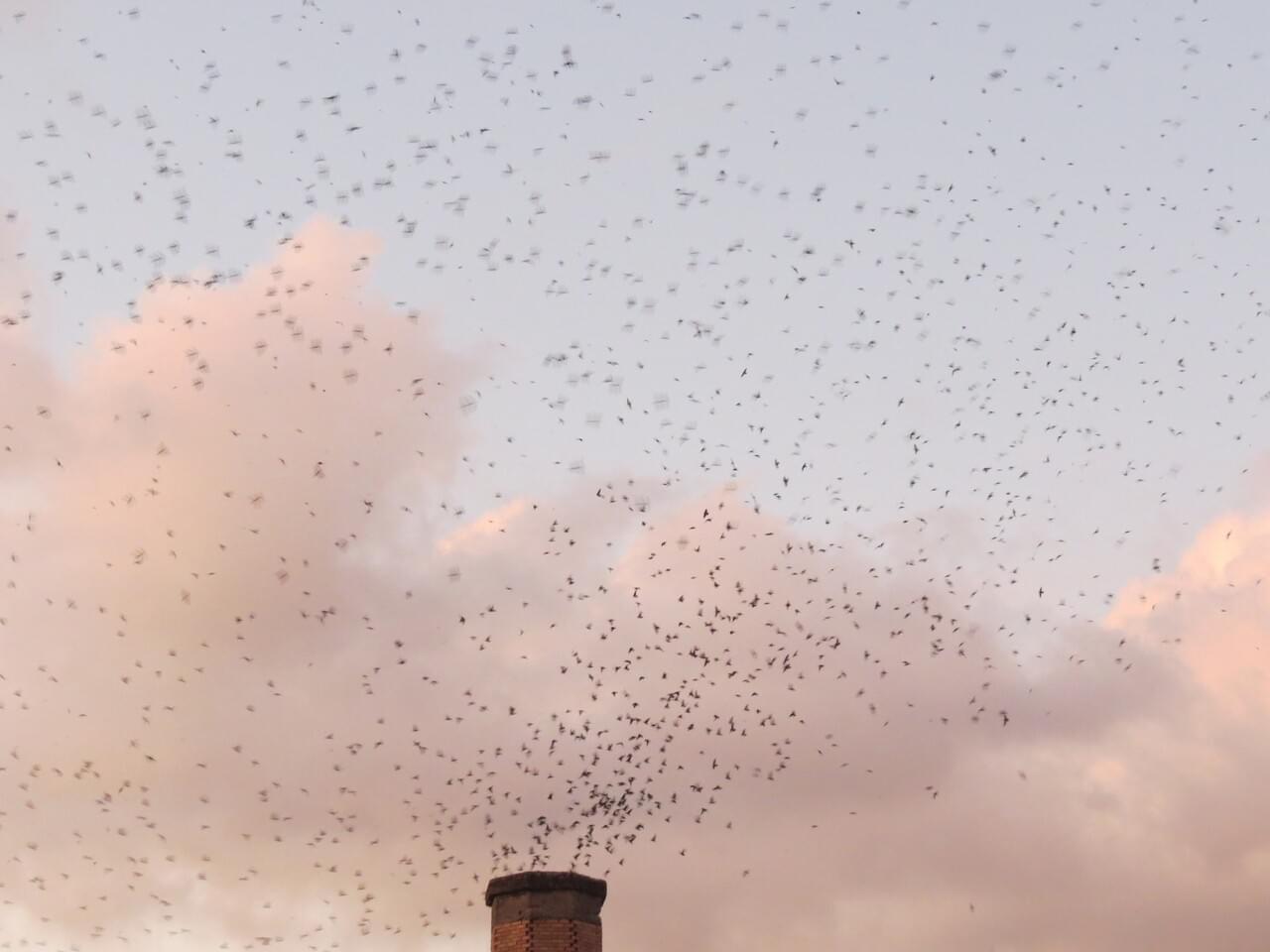
The Vaux Swift is a bird that roosts by the thousands in chimneys every fall. Portland Oregon’s Chapman Elementary (pictured above) had one of the most celebrated swift roosts, til the birds abandoned the annual migration site for others in the region.
Is there Anything Else that Critics could point to about Vaux?
There is one indirect artifact that possibly shifts towards negativity with Vaux. According to his critics, Vaux collected archaeological material from San Miguel and San Nicolas Islands, off the coast of California. He also owned James McBride’s archaeological surveys and field notes of Native American Indian mounds in Ohio. Under modern ethical standards, collecting Indigenous objects, which may have included grave goods, raises serious ethical questions. However, no specific accusations have surfaced against him, even though that kind of collecting was routine for wealthy curators of his era.
The mineral collections have their own story. Vaux required that they be kept intact and separate from the rest of the Academy’s holdings. In the 1980s, Vaux relatives, some of whom were unhappy with their condition, packed them up and moved them to Bryn Mawr College. The original ledgers of minerals, however, remain at the Academy.
=-=-=-=-=-=-=-=-=-=-=-=-=-=
Footnotes
[1] https://en.wikipedia.org/wiki/William_Sansom_Vaux
[2] Arsenic is one of the prime ingredients used in preservatives to taxidermy birds that were stuffed for scientific and avian collections around the world. Taxidermists in that era struggled heavily with flesh-eating dermestid beetles and moths. To combat this, they used powerful toxic agents including: Alum and Salt (used as drying agents and minor curatives to draw out moisture and tighten the skin); Arsenic (a paste made of arsenic trioxide, camphor, potassium carbonate, tallow, and soap); and Mercuric Chloride (a poison dusted on the interior of the skin to kill pests). These ingredients became the global gold standard for bird preservation, and were later connected to the deaths of those who were in constant contact with these preservation methods.
=-=-=-=-=-=-=-=-=-=-=-=-=-=
Appendix
The One Bird connected to Vaux
- Vaux’s Swift (Chaetura vauxi). John Kirk Townsend described it in 1839 from specimens he collected on the Columbia River, during his 1834–36 journey with Thomas Nuttall. He originally called it Cypselus vauxi. It’s a tie-in to your Townsend piece: Townsend named the bird for a Philadelphia friend who had never been on a trip West.
Works about Vaux and his Swift
- “The Legacy of Eponymous Bird Names.” Yolo Bird Alliance, yolobirdalliance.org/legacy-eponymous-bird-names/. Accessed 8 Oct. 2026.
- Townsend, John K. “Description of Twelve New Species of Birds, Chiefly from the Vicinity of the Columbia River.” Journal of the Academy of Natural Sciences of Philadelphia, vol. 8, 1839, pp. 148–59.
- “Vaux, William Sansom.” Bird Names for Birds, birdnamesforbirds.wordpress.com/historical-profiles/profiles-a-z/vaux-william-sansom/. Accessed 8 Oct. 2026.
- “Vaux’s Swift: Natural History.” Bird Alliance of Oregon, audubonportland.org/local-birding/swiftwatch/swift_natural-history. Accessed 8 Oct. 2026.
- “William Samson Vaux.” A Field Guide to American Ornithology in the Delaware Valley, 1699–1900, Delaware Valley Ornithological Club, dvoc.org/DelValOrniHistory/VauxWilliam/VauxWilliam.htm. Accessed 8 Oct. 2026.

