
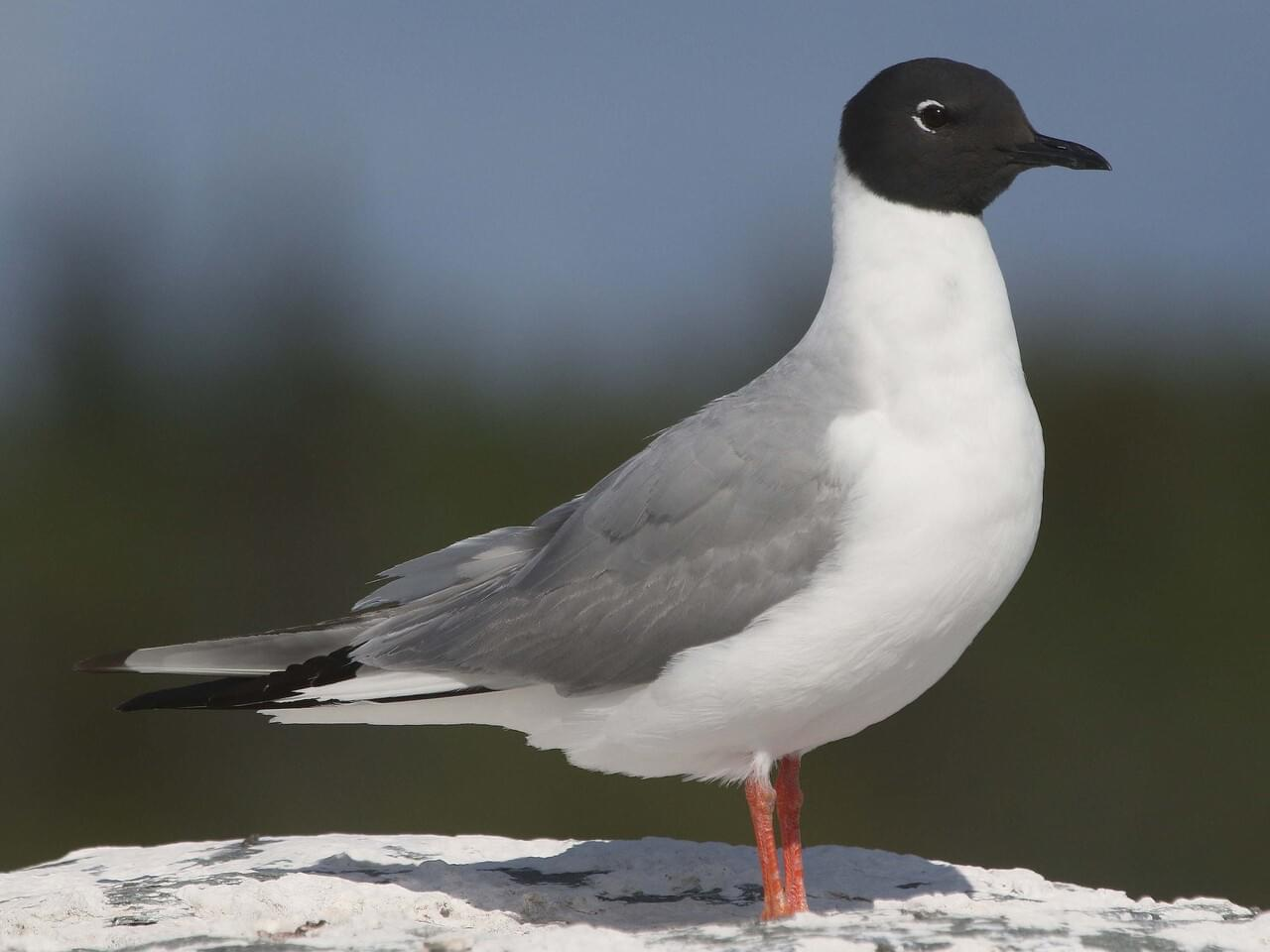
Birds of Bonaparte
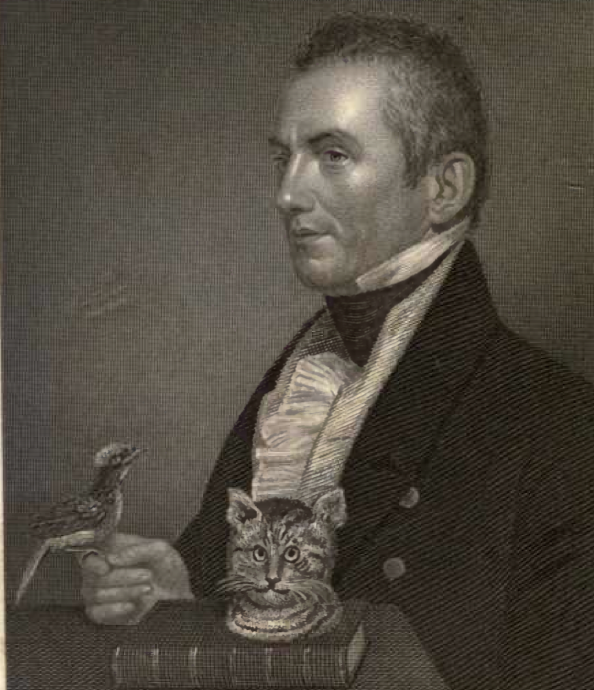
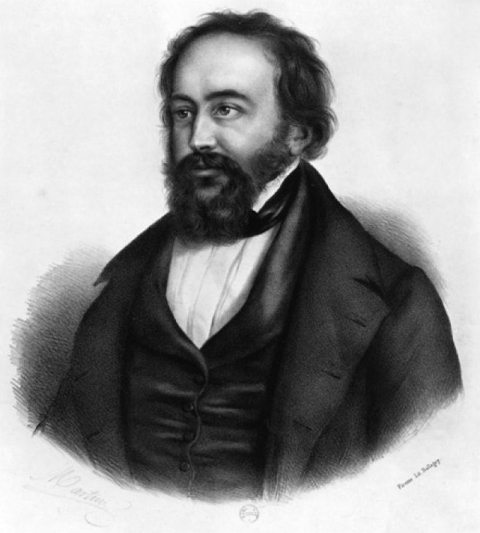
Charles Lucien Bonaparte (1803–1857), the 2nd Prince of Canino and Musignano, grew up to be a world-renowned French naturalist, biologist, and ornithologist. He was the son of Lucian Bonaparte, one of Napoléon’s brothers. And therefore, he was the nephew of the French Emperor Napoléon Bonaparte I. Unlike his uncle, who conquered nations, Charles Bonaparte dedicated his life to conquering the natural sciences, describing more than 500 new species of animals and establishing 165 new genera.[1]
His adult life was a fascinating blend of high imperial drama, groundbreaking scientific exploration across continents, and revolutionary politics.
Imperial Tension & Childhood in Exile
Charles was born in 1803 in Paris. His early life was immediately caught up in family political turmoil. His father, Lucien, was a staunch republican who openly disapproved of Napoléon’s imperial ambitions. To make matters worse, Napoléon violently opposed Lucien’s marriage to Alexandrine de Bleschamp, a commoner widow and demanded his brother file for divorce. Lucien refused, chose love over the crown, and fled to Rome under protection of Pope Pius VII. Because of this family feud, Napoléon officially banned his brother, Lucien, and his nephew, Charles, from the imperial line of succession. While fleeing Italy for the U.S. in 1810, the family was captured by the British and held for four years in England, where young Charles received an elite education and fell in love with natural history.[1]
Coming to America and Scientific Breakthroughs
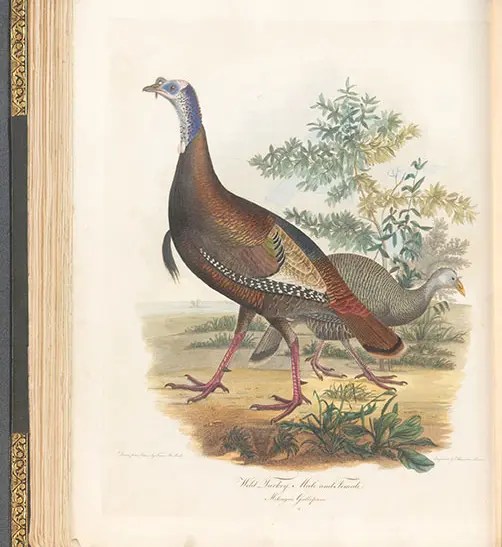
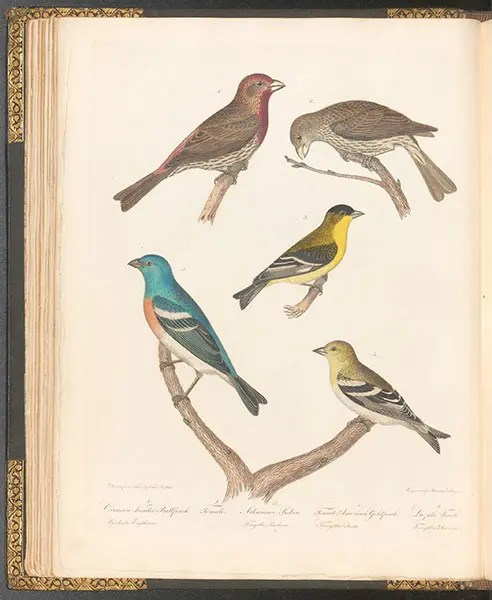
In 1822, the facts boarder on incest: Charles married his first cousin, Princess Zénaïde, the daughter of Joseph Bonaparte (Charles’ paternal uncle). The newlyweds moved to Philadelphia to live with her father, Joseph Bonaparte, who was the former King of Spain. Once in America, Charles’s passion for birds exploded. He became an active member of the American Philosophical Society and set out to update and expand Alexander Wilson’s seminal American Ornithology. He discovered over a hundred new bird species in the U.S. alone. Notably, he recognized the brilliance of the then-unknown painter John James Audubon, supporting his work and attempting to help him get his paintings published.[1]
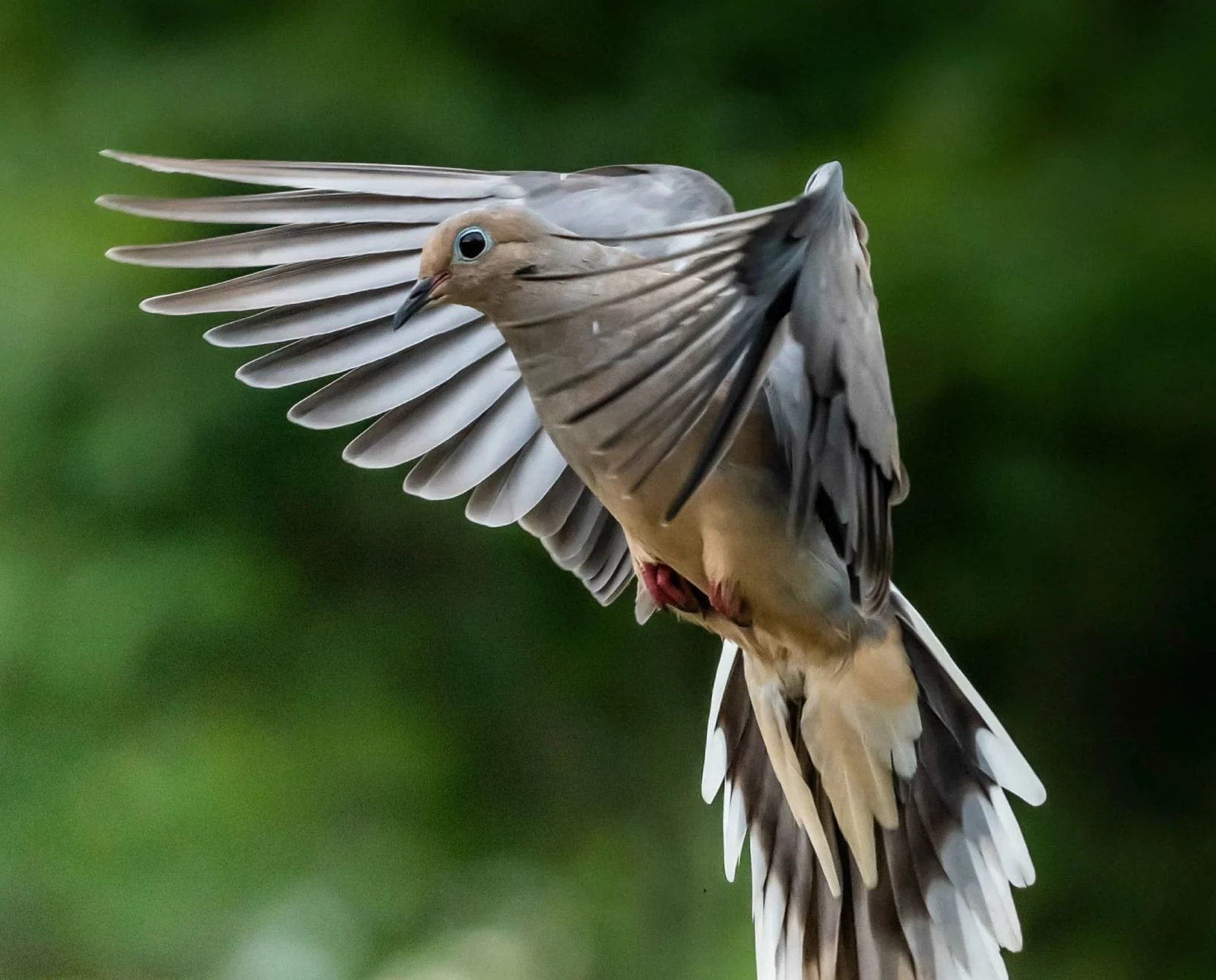
Fun Bird Fact: Charles loved his wife deeply and immortalized her in his work; he established the dove genus Zenaida (which includes the Mourning Dove (Zenaida macroura)) in her honor.
While there may have been honor between the couple, two children were born in America, but only one survived to adulthood. Between the two births, Zénaïde had two miscarriages, which damaged her health.
Return to Europe and Revolutionary Politics
In 1826, after a dozen years in the U.S., Charles and Zénaïde returned to Europe, and settled in Rome, Italy, which was part of the Papal States and not part of unified Italy. There Zénaïde and Charles seemed apolitical, while they raised ten more children: one child, Lucien, grew up to be Cardinal and while three other died from health problems. While in Rome, Charles published Iconografia della Fauna Italica, an exhaustive work on Italian wildlife.
However, with the Bonaparte name on both sides of the family it became impossible to avoid politics forever. In the late 1840s, he joined the radical anti-Austrian movement for Italian independence. He was elected Vice President of the brief, revolutionary Roman Assembly in 1849 and passionately defended the Roman Republic. Ironically, the Republican army he joined was crushed by French troops that had been sent to quell the uprising by Charles’s cousin, Louis-Napoléon (the future Emperor Napoléon III). The military defeat forced Charles to flee Italy and into exile once again. He took refuge in Southern Scotland. Zénaïde, who did not share his revolutionary principles, stayed with their children in Rome.[1]
Returning from Exile to Paris
Eventually, Charles’ imperial cousin, Louis-Napoléon, permitted him to return to France in 1850. Charles spent his final years completely immersed in science in Paris, the city of his birth. Since his exile, he had been estranged from his wife, Zénaïde, and they never saw each other again. She died in 1854, in Naples. She was 53. The doctors reported that she died of a heart attack brought on by diphtheria. The timing was only a few months after she had obtained her formal separation from Charles.
That same year, 1854, Charles was appointed director of the prestigious Jardin des Plantes botanical garden. He passed away three years later in 1857 in Paris at the age of 54. He was survived by 8 of his 12 children.
As collected and enumerated in the Appendix A (below) Charles Bonaparte seems to have left behind a lasting legacy of animal names and descriptions that point to one of the most brilliant taxonomic minds of the 19th century.
Question: How should we go about deciding to drop the Bonaparte name or not?
Interestingly, the current renaming of his eponymous birds isn’t about Bonaparte’s character. According to the AOS, in November 2023 the Society committed to changing every English bird name in its region that honors a person, about 80 species in the U.S. and Canada, Bonaparte’s Gull included. The AOS deliberately chose a blanket policy, rather than judging individuals. An AOS spokesperson described the decision as moving away from what individual people did and toward a focus on the birds themselves. The Society is intent on inviting more people into birding. Anyone arguing against the Bonaparte name on personal grounds is making a different argument from the one actually driving the change. Anyone defending the name on the grounds that he was a decent man is also missing the point, since the policy applies regardless.[3] wtvr
The Bird Name Change movement began partly in response to names honoring people tied to slavery, Confederate service, or the mistreatment of Indigenous people, such as the former Audubon’s Warbler, McCown’s Longspur and Townsend’s Warbler. Nothing comparable attaches to Bonaparte’s American years. Critics of the blanket approach have made this point. An Ohio commentator argued that the AOS hasn’t shown most honorees were racist, and that the policy amounts to removing all eponyms so that the problematic ones go away in the sweep.[4] yahoo
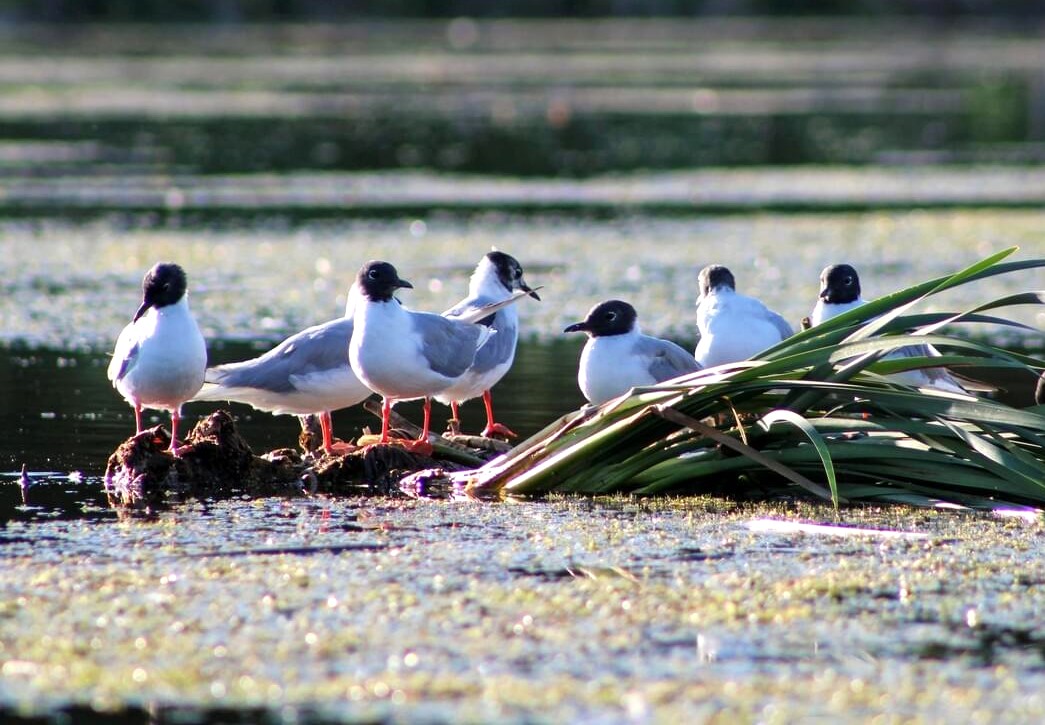
If the objection to the European Names is to emphasize that a “prince directly related to Napoleon Bonaparte shouldn’t be honored,” Charles Bonaparte’s own record complicates matters. He fought for a republic against the Pope and against French imperialism and power, and he was exiled for years for his actions.
He wasn’t a wealthy donor who bought his way onto a bird. Bonaparte earned recognition through actual science. His taxonomic and nomenclatural work shaped the field in both America and Europe for nearly 200 years.
It is important to point out that the scientific name already honors a place. The gull species was described by George Ord in 1815 as philadelphia, which was named after the city where it was collected. The AOS is changing only English names, not scientific ones. Renaming the gull removes Bonaparte’s name from popular use, but the bird’s formal identity was never tied to him.
Final Question: What is the argument FOR Renaming the Gull again?
Supporters who want to scrub off the Bonaparte name, and every other name, argue that eponyms describe nothing about the bird, so a name based on appearance or behavior is more useful to beginner birders. They point out that the honorees are overwhelmingly white European and American men, which can make the hobby for a young girl feel like it belongs to someone else. They also argue that judging each person individually would mean endless, subjective, messy disputes, and that a rule exacting a clean slate avoids that eventuality.[2]
On the other hand, opponents say stable bird names aid communication, eponyms preserve the history of the science, and renaming uncontroversial figures dilutes the force of the objection to genuinely offensive ones. Some devoted birders have advocated that the AOS should start with dropping Audubon, Townsend, Scott and McCown and see where the chips fall from there.
The AOS will weigh in on all of the names, such as Bonaparte, as time goes by.
=-=-=-=-=-=-=-=-=-=-=-=-=-=-=-=-=-=-=-=
Footnotes and References to the Bird Post:
[1] https://en.wikipedia.org/wiki/Charles_Lucien_Bonaparte
[2] FAQ about the name changing rules set forth by the AOS.
[3] https://www.wtvr.com/news/national-news/bird-species-names-racist-roots-changed-november-2-2023
[4] https://www.yahoo.com/news/nature-opinion-american-ornithological-society-110039161.html
=-=-=-=-=-=-=-=-=-=-=-=-=-=-=-=-=-=
Appendix A
Below is a list of birds that have either been attributed to, named for, or written about by Charles Lucien Bonaparte or birds he named for others by him:
- Bonaparte’s Gull (Chroicocephalus philadelphia). The English name honors him. The species was described by George Ord in 1815, and an old synonym was Larus bonapartei.
- Highland Tinamou, also called Bonaparte’s Tinamou (Nothocercus bonapartei), described by G. R. Gray in 1867.
- Bonaparte’s Parakeet (Pyrrhura lucianii), also called Deville’s Parakeet. The name lucianii is generally taken to honor Charles Lucien, his middle name used as the scientific name.
- Golden-bellied Starfrontlet (Coeligena bonapartei), a hummingbird.
- Bonaparte’s Nightjar (Caprimulgus concretus). Bonaparte described it himself; the English name honors him.
Named by him for his wife: the dove genus Zenaida, which he named in 1838 for his first cousin and wife, Zénaïde. The genus includes the Mourning Dove (Zenaida macroura) and Zénaïde Dove (Zenaida aurita).
Birds discovered or described by Charles L. Bonaparte:
- Yellow-headed Blackbird (Xanthocephalus xanthocephalus), described in 1826.
- Western Burrowing Owl (Athene cunicularia hypugaea), described in 1825.
- Scott’s Oriole (Icterus parisorum), described in 1838. He named it for the Paris brothers, years before Couch called it “Scott’s oriole.”
- West Solomons Owl (Athene jacquinoti), described in 1850.
- Albert’s Lyrebird (Menura alberti). He’s credited only on a technicality: John Gould described it first, but Gould’s description was published after Bonaparte referred to it.
- Wilson’s Storm-Petrel (Oceanites oceanicus). He collected it on his 1823 crossing and presented a paper on it, and it was later named for Alexander Wilson.
- Moustached Warbler (Acrocephalus melanopogon). He found it in Italy as a bird new to science, but Temminck published the formal description.
- Parakeet genus Eupsittula, named in 1853, which includes the Orange-fronted Parakeet.
Discovered or described by Bonaparte: genera and species (may have errors)
- Birds: Pterodroma (gadfly petrels), Bulweria (Bulwer’s Petrel), Streptopelia (turtle doves), Catharus (nightingale-thrushes), Spizella (American sparrows), Passerculus (Savannah Sparrow), Cardellina (Red-faced and Wilson’s Warblers), and the parrot genera Pyrrhura, Myiopsitta (Monk Parakeet), Cyanopsitta (Spix’s Macaw), and Eolophus (Galah).
- Mammals: Savi’s Pipistrelle (Hypsugo savii).
- Amphibians: Apennine Yellow-bellied Toad (Bombina pachypus).
- Fish: Italian Barbel (Barbus plebejus), South European Roach (Rutilus rubilio), Italian Riffle Dace (Telestes muticellus), and South European Nase (Protochondrostoma genei).
- Reptiles: Ursini’s Viper, also called the Meadow Viper (Vipera ursinii), which Bonaparte described.
=-=-=-=-=-=-=-=-=-=-=-=-=-=-=-=-=-=-=-=
Appendix B
Below is a list of some of the writings that have been attributed to or written by Charles Lucien Bonaparte. While this is not an exhausive and definitive list, it is a good place to start for anyone who is seeking more insights and information about this man and his passions:
- Bonaparte, Charles Lucien. American Ornithology; or, The Natural History of Birds Inhabiting the United States, Not Given by Wilson. 4 vols., Philadelphia, 1825–33.
- —. Catalogo metodico degli uccelli europei. Bologna, 1842.
- —. Catalogue des oiseaux d’Europe offerts, en 1856, aux ornithologistes. Paris, 1856.
- —. “Catalogue of the Birds of the United States, Systematically Arranged in Orders, Families, Genera and Subgenera.” Contributions of the Maclurian Lyceum to the Arts and Sciences, vol. 1, 1827, pp. 7–34.
- —. Classification ornithologique par séries. [Paris], 1853.
- —. Conspectus generum avium. Edited by Hermann Schlegel, 2 vols., Leiden, 1850–57.
- —. Conspectus systematis ichthyologiae. Leiden, 1850.
- —. Conspectus systematis ornithologiae. Leiden, 1850.
- —. Conspectus volucrum anisodactylorum. Paris, 1854.
- —. “Coup d’œil sur l’ordre des pigeons.” Comptes rendus hebdomadaires des séances de l’Académie des sciences, vols. 39–40, 1854–55.
- —. A Geographical and Comparative List of the Birds of Europe and North America. London, 1838.
- —. Iconografia della fauna italica per le quattro classi degli animali vertebrati. 3 vols., Rome, 1832–41.
- —. Iconographie des pigeons non figurés par Mme Knip dans les deux volumes de MM. Temminck et Florent Prévost. Paris, 1857–58.
- —. Notes ornithologiques sur les collections rapportées en 1853 par M. A. Delattre, et classification parallélique des passereaux chanteurs. Paris, 1854.
- —. “Notes sur les collections rapportées en 1853, par M. A. Delattre, de son voyage en Californie et dans le Nicaragua: Chanteurs curvirostres.” Comptes rendus hebdomadaires des séances de l’Académie des sciences, vol. 38, 1854, pp. 258–66.
- —. “Notes sur les collections rapportées en 1853, par M. A. Delattre, de son voyage en Californie et dans le Nicaragua: Chanteurs subulirostres.” Comptes rendus hebdomadaires des séances de l’Académie des sciences, vol. 38, 1854, pp. 53–66.
- —. “Observations on the Nomenclature of Wilson’s Ornithology.” Journal of the Academy of Natural Sciences of Philadelphia, vols. 3–5, 1824–26.
- —. Ornithologie fossile. Paris, 1858.
- —. Revue critique de l’ornithologie européenne. Brussels, 1850.
- —. Specchio comparativo delle ornitologie di Roma e di Filadelfia. Pisa, 1827.
- —. “Synopsis of the Birds of the United States.” Annals of the Lyceum of Natural History of New York, vol. 2, 1826–28, pp. 7–200.
- —. “Tableau des oiseaux de proie.” Revue et magasin de zoologie pure et appliquée, 2nd series, vol. 6, 1854, pp. 530–44.
- —. Tableau des oiseaux-mouches. Paris, 1854.
- Bonaparte, Charles Lucien, et al. Iconographie des perroquets, non figurés dans les publications de Levaillant et de M. Bourjot Saint-Hilaire. Paris, 1857–58.
- Bonaparte, Charles Lucien, and Hermann Schlegel. Monographie des loxiens. Leiden, 1850.

