
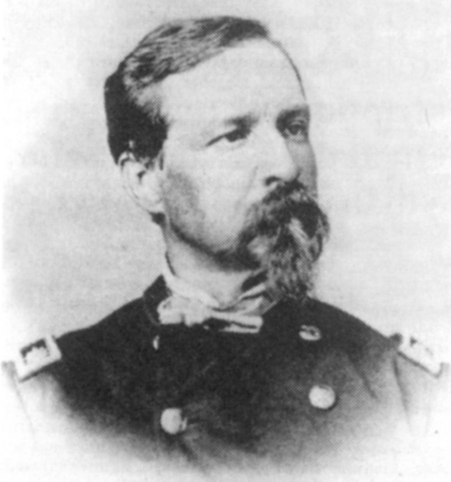
Birds of Abert
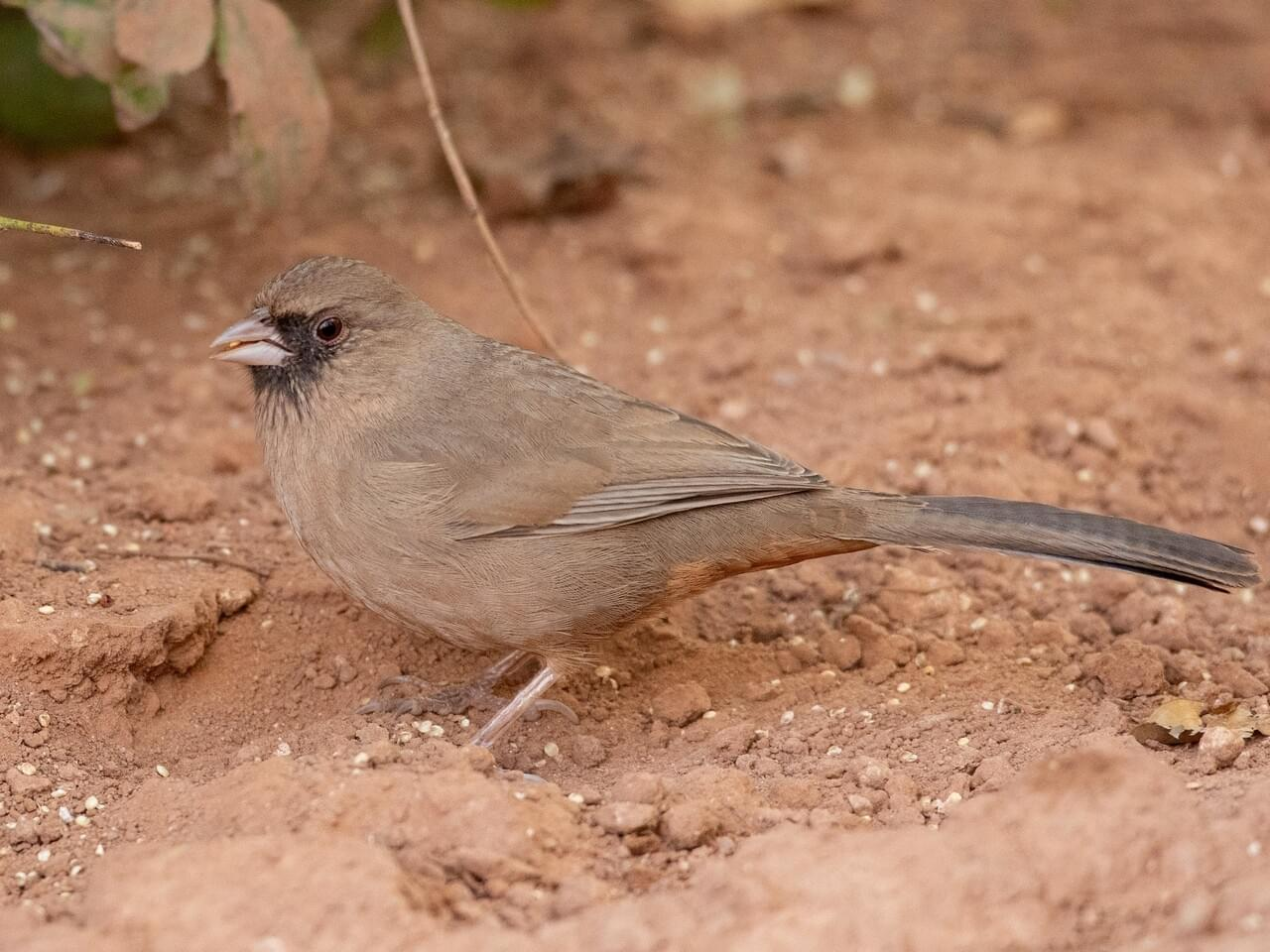
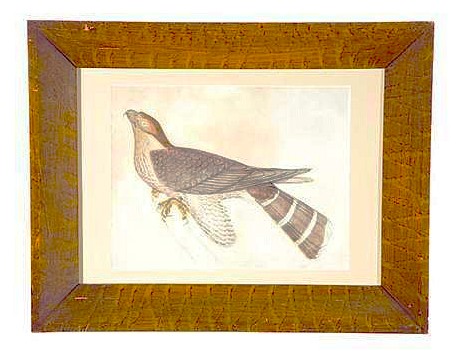
The camoflaged Southwestern bird pictured above is named Abert’s Towhee after James William Abert, an American naturalist, ornithologist, and U.S. Army topographical engineer. In 1852, famed naturalist Spencer Baird officially described the species and named it in Abert’s honor. James Abert had collected the original bird specimen during a military expedition and survey of New Mexico following the Mexican-American War. [1]
If you are interested in southwestern wildlife namesakes, I can also share the story behind Abert’s squirrel, which is actually named after James’s father,
The premise needs one correction: the AOS hasn’t singled Abert out, and I found no record of him doing anything personally offensive. Abert’s Towhee isn’t one of the six birds in the AOS pilot project. The Abert Towhee appears to be on the list for renaming only because of the blanket rule covering all birds named after people.[3]
Abert’s Backstory
James William Abert was born in November 1820, in Mount Holly, New Jersey. His father, John James Abert, was chief of the Army’s Topographical Engineers, the corps formed to map the American West, and led the corps of engineers from the start. John James Abert served from 1828 until he retired for health reasons in 1861, and died in Washington, DC, in January 1863. His mother was Ellen Matlack Stretch, who married John James Abert in January 1812. James’s brothers included Charles (1822–1897), Silvanus Thayer Abert (1828–1903), a civil engineer, and William Stretch Abert (1836–1867), a Union cavalry officer who fought at Williamsburg and Antietam and died young of yellow fever in New Orleans, Louisiana.[1]
Abert married into the Stone family of Washington, DC; one of his sons was named William Stone Abert. Beyond that, family records conflict. Presumptively, Abert married Jane Lenthall. They had several children.[2]
As to Ebert’s education, he graduated from an academy at Princeton at the age of 18, in 1838, and entered West Point that September. After graduating from West Point in 1842 he served in the 5th U.S. Infantry, then in 1843 transferred to the Topographical Engineers under his father. His first assignment was a large survey of the northern Great Lakes in 1843–44.
The 1845 Fremont Expedition
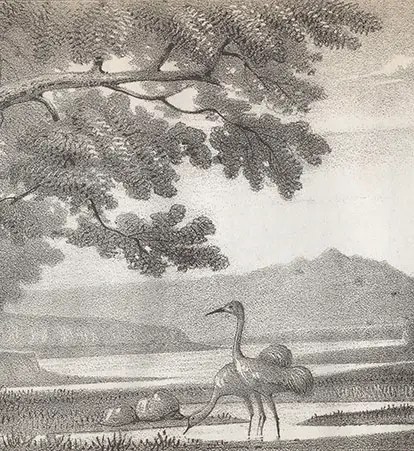
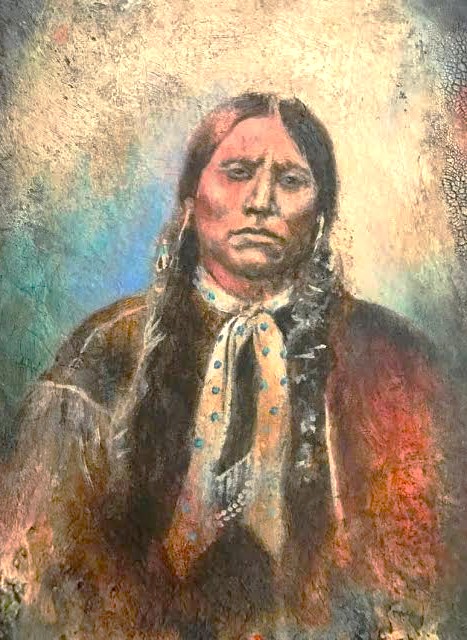
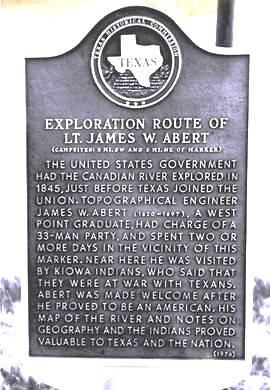
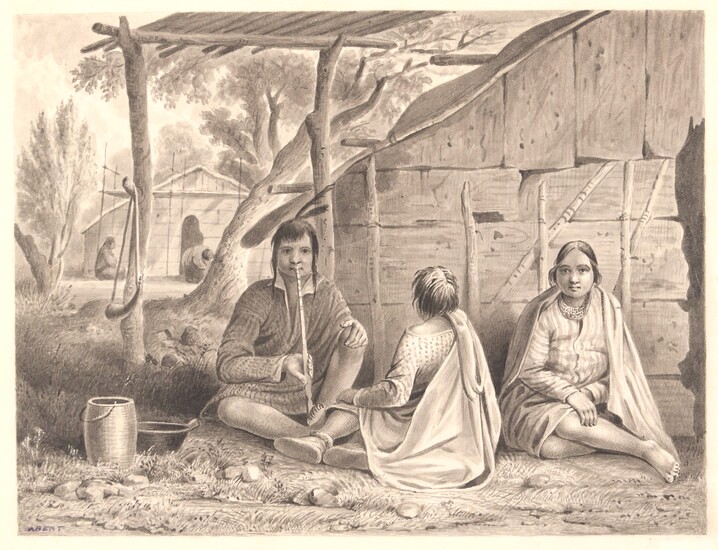
In 1845 he set out from St. Louis with John C. Frémont, already famous as “the Pathfinder.” Instead of continuing to California, though, Abert was ordered to explore the headwaters of the Canadian River. His report covered the geology, plants, and animals of the Canadian valley. His descriptions of Kiowa and Comanche customs later proved valuable to the federal government, a detail AOS critics might point to as an example of exploration serving conquest. He also made sketches and watercolors of Bent’s Fort, wildlife, and Native leaders, including the Kiowa chief, Dohäsan, whose village the expedition visited.
The Mexican War and New Mexico
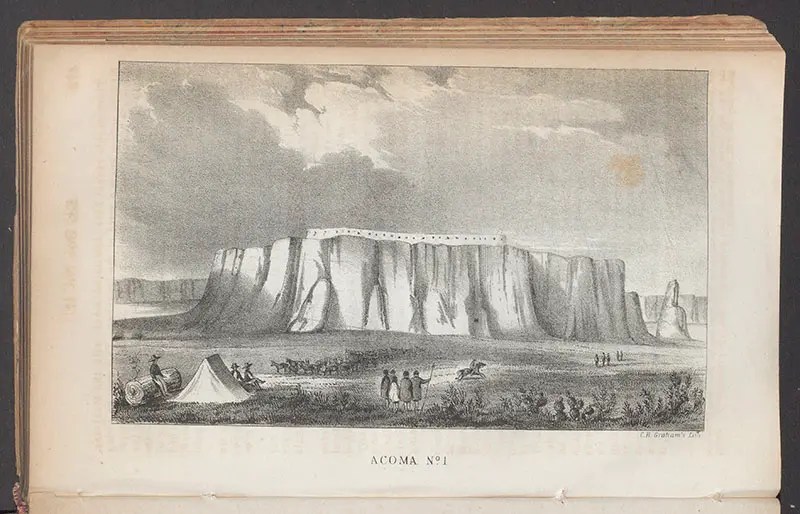
In 1846 he joined General Kearny’s Army of the West, which left Fort Leavenworth for the war with Mexico. A life-threatening fever kept him at Bent’s Fort in southeastern Colorado for a long time, but after recovering he spent a year traveling through New Mexico with another young engineer. During this period he obtained the first specimen of the towhee later named for him. He visited most of the pueblos, including Acoma, Santo Dominigo, and Sante Fe, and being a talented artist, he made sketches along the way, of the countryside, the settlements, and the native Americans. He also paid attention to the flora and fauna, and the geology. Although too young to be an experienced naturalist, he nevertheless managed to discover a passion for birds. His Report of His Examination of New Mexico in the Years 1846–’47 appeared in 1848, tucked in the back of William Emory’s Notes of a Military Reconnaissance.
Abert’s other Military Service and Career
After the Mexican War he taught drawing and painting to cadets at West Point. In the Civil War he served in the Shenandoah Valley from June 1861 to September 1862. Unlike many fellow engineers, he survived the war and worked at various jobs, including a stint as a professor of English literature, mathematics and drawing at the University of Missouri. He was also a professor of civil engineering, applied mathematics, and engineering drawing at the Missouri School of Mines and Metallurgy (1872–1877).
He later headed Kentucky’s Examining Board of Teachers of Public Schools. He was reappointed a Major in January 1895, retired almost immediately, and died at his home in Newport, Kentucky, in August 1897. He’s buried in Evergreen Cemetery in Southgate, Kentucky.
=-=-=-=-=-=-=-=-=-=-=-=-=-=-=-=-=-=-=-=-=-=
Appendices
Bird and Animal Species Connected to an Abert
- Abert’s Towhee (Melozone aberti). Spencer Baird described it in 1852 and named it for James, who obtained the first specimen during his New Mexico survey. James Abert didn’t formally name any species himself; Spencer Baird and others described the specimens he collected.
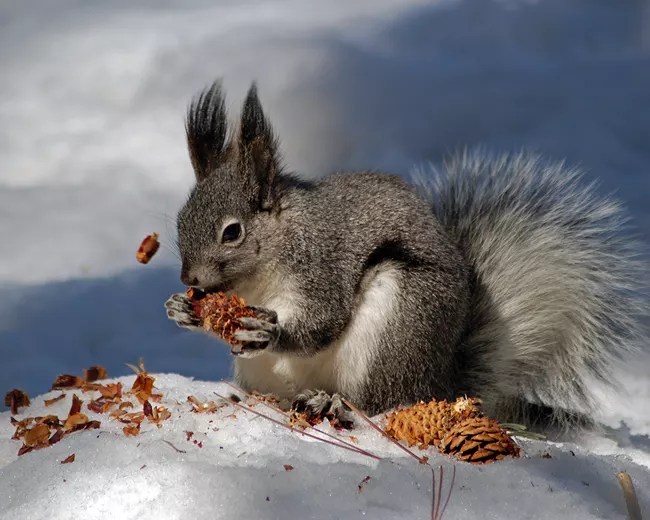
- Abert’s Squirrel (Sciurus aberti). Sources disagree on which Abert this honors. One credits James with discovering it and that seems affirmed by The Linda Hall Library. An article in Wikipedia, however, says the squirrel was named after his father, Col. John James Abert. Samuel Woodhouse named it in 1853 while serving in the Topographical Engineers under the command of the elder Abert, James’ father.
Written Works by James W. Abert
- Abert, J. W. Abert’s New Mexico Report, 1846–’47. Foreword by William A. Keleher, Horn and Wallace, 1962.
- —. Expedition to the Southwest: An 1845 Reconnaissance of Colorado, New Mexico, Texas, and Oklahoma. Introduction by H. Bailey Carroll, U of Nebraska P, 1999.
- —. “Journal of Lieutenant J. W. Abert, from Bent’s Fort to St. Louis, in 1845.” Senate Document 438, 29th Congress, 1st Session, Washington, DC,1846.
- —. “Report of Lieut. J. W. Abert, of His Examination of New Mexico, in the Years 1846–’47.” Notes of a Military Reconnoissance, from Fort Leavenworth, in Missouri, to San Diego, in California, by W. H. Emory, Washington, DC, 1848.
- —. Through the Country of the Comanche Indians in the Fall of the Year 1845: The Journal of a U.S. Army Expedition Led by Lieutenant James W. Abert. Edited by John Galvin, John Howell Books, 1970.
- —. Western America in 1846–1847: The Original Travel Diary of Lieutenant J. W. Abert, Who Mapped New Mexico for the United States Army. Edited by John Galvin, John Howell Books, 1966.
- The Filson Historical Society in Louisville, Kentucky holds “James Abert’s papers from 1861 to 1893.” A primary sources for Abert’s family life.
- The Missouri History Museum holds the “Abert Family Letters.” Another primary sources for the Abert’s family life.
Written Works about James W. Abert
- Goetzmann, William H. Army Exploration in the American West, 1803–1863. Yale Univ. Press, 1959.
- “James W. Abert.” Scientist of the Day, the Linda Hall Library, www.lindahall.org/about/news/scientist-of-the-day/james-w-abert/. Accessed 8 Oct. 2026.
- “Abert, James William.” Handbook of Texas Online, Texas State Historical Association, www.tshaonline.org/handbook/entries/abert-james-william. Accessed 8 Oct. 2026.
- “James W. Abert (1820–1897): Artist, Naturalist, Land Developer, and Topographical Engineer,” an unconfirmed article which appears to be from a Kentucky historical journal around 2005.
- There is another unconfirmed document: an Abert related book from 1979, that was reportedly published by the University of New Mexico Press.
Footnotes:
[1] https://en.wikipedia.org/wiki/James_William_Abert
[2] In Washington at that time, the engraver William J. Stone was married to Elizabeth Jane Lenthall, and their son Robert King Stone became Abraham Lincoln’s physician. A daughter of that family could well have been named Jane Lenthall Stone, which would explain both names and Abert’s son’s name: William Stone Abert. If true that would mean Abert married into a prominent Washington family, which would fit his father’s prominent position there in DC. This is only an inference, and not something confirmed, but it’s a nice detail for this Birds of Abert Post: Abert’s brother-in-law was possibly Abraham Lincoln’s doctor.
[3] The criticism of Abert and the desire to remove his name seems to come mainly from Stephen Carr Hampton, a Change All Bird Names advocates. Hampton listed Abert’s Towhee among bird names he links to violence against Native people. As far as I can tell, that objection is about what Abert’s military career served, rather than anything he did himself: he was an Army officer who mapped land for the US invasion of Mexico and for American expansion into Native and Mexican territory. Hampton doesn’t accuse Abert of any specific atrocity, and I didn’t find evidence of one. However, his maps were later used to the detriment of many Native American tribes. The case FOR removal of Abert’s name seems much weaker than similar cases with Gen. Winfield Scott, John Kirk Townsend or John Bachman.

